
Closed Thursday, Friday and Monday. Back on Tuesday 9 June. NatroVital orders placed before 12pm Thursday will be dispatched Thursday. Orders placed after this time will be dispatched Tuesday.

0

Your Cart is Empty

  • Add description, images, menus and links to your mega menu

  • A column with no settings can be used as a spacer

  • Link to your collections, sales and even external links

  • Add up to five columns

  • PCOS and Ovulation: Why You’re Not Ovulating — and What It Means for Your Cycle

    by Greg Newson 32 min read

    PCOS: Why Ovulation Isn’t Happening — and What That Does to Your Cycle | NatroVital

    You’ve been told you have PCOS — but your cycle is still all over the place, ovulation isn’t happening properly, and no one has really explained why.

    Polycystic ovary syndrome (PCOS) is one of the most common hormonal conditions affecting women, yet for many women the diagnosis still feels confusing. They are told they have PCOS, but often not properly shown what that actually means, why their cycle is off, why ovulation is not happening properly, or why so many different symptoms can come with it. When those answers are missing, PCOS can feel more like a label than something that can be clearly understood and meaningfully improved.

    For some women, PCOS shows up as irregular periods, acne, excess hair growth, weight gain, or trouble falling pregnant. For others, it looks quite different. They may be lean, active, and appear perfectly healthy on the outside, yet still deal with long cycles, missing periods, ovulation pain, mood changes, PMS, or the feeling that their hormones are never quite doing what they should. This is one of the reasons PCOS can be so frustrating — it does not look the same from one woman to the next, and it does not always fit the stereotype people expect.

    Despite the name, PCOS is not simply about having cysts on the ovaries. In many cases, the bigger issue sits around ovulation — whether it is happening properly and consistently.


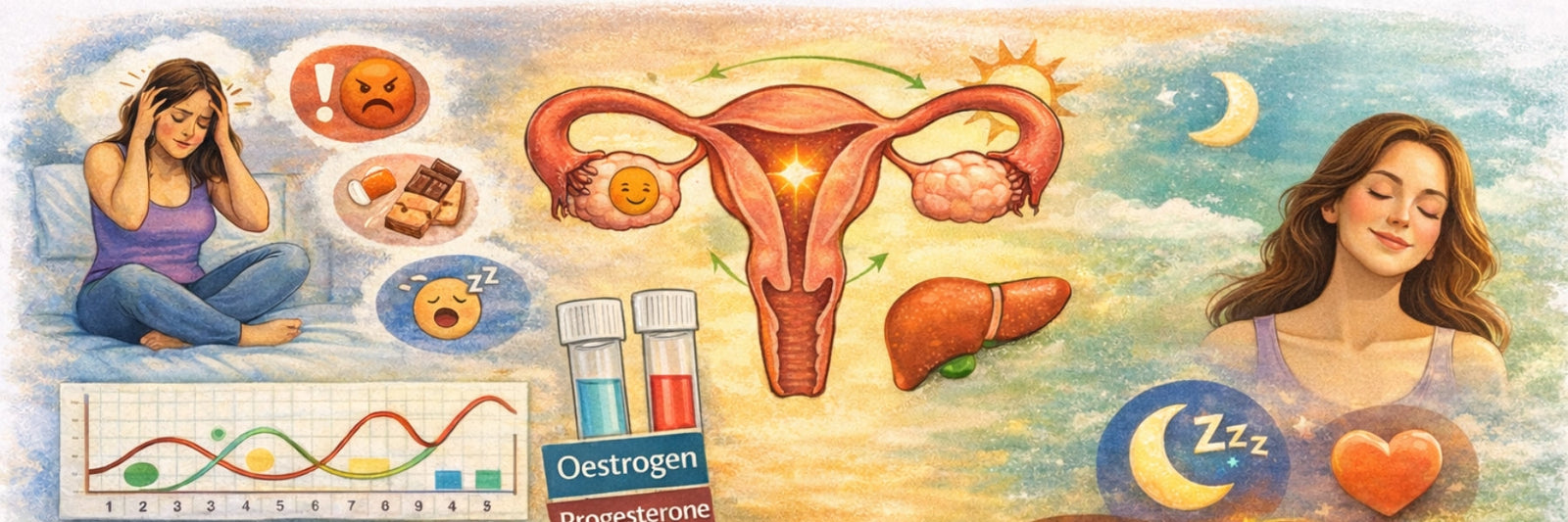
    Infographic explaining how PCOS disrupts ovulation, affects progesterone, and contributes to irregular cycles, PMS, acne, fertility issues and hormone imbalance


    The body may begin the process of developing follicles, but it does not always follow through to releasing an egg. When that keeps happening, the menstrual cycle can become irregular or unpredictable, progesterone does not rise the way it should, androgen levels may become more dominant, and a wide range of symptoms can start to build around that.

    The important point to understand: PCOS is rarely driven by a single issue. It is usually the result of several underlying drivers building on each other — especially blood sugar and insulin issues, chronic stress, poor sleep, inflammation, and disrupted signalling between the brain and the ovaries. In some women, other issues such as gut dysfunction, nutrient deficiencies, or sluggish hormone clearance can add even more pressure to the picture. When these drivers are identified and supported properly, ovulation often becomes more regular, cycles begin to make more sense, and symptoms can start to settle.

    This article is here to help you understand what PCOS really is, why ovulation is so often the missing piece, what may be driving the pattern underneath it, and where natural support can make a meaningful difference. Rather than stopping at the diagnosis alone, we will break the picture down step by step so you can better understand your body and feel more confident about what to focus on next.

    If your cycle is irregular, unpredictable, or ovulation isn’t happening properly, this is the place to start.

    PCOS often becomes easier to understand when you stop looking at each symptom separately and start looking at what is disrupting ovulation underneath.

    For many women, supporting regular ovulation is one of the most important steps in helping the cycle become more consistent.

    Start restoring ovulation →

    Why PCOS Stops Ovulation

    For most women with PCOS, the issue isn’t that the ovaries can’t work — it’s that the signals controlling ovulation aren’t lining up properly.

    Ovulation depends on a very specific sequence of signals between the brain and the ovaries. In PCOS, that sequence becomes disrupted. Follicles may begin developing, but the hormonal signals required to complete ovulation don’t line up properly, so the process stalls before an egg is released.

    This is why ovulation can become irregular, delayed, or stop altogether.

    And when ovulation is not happening consistently, the rest of the cycle doesn’t have a stable foundation to follow.

    The most common drivers behind this include:

    • Insulin and blood sugar imbalance — higher insulin levels can push the ovaries to produce more androgens, which interferes with ovulation
    • Chronic stress and adrenal signalling — elevated cortisol and adrenaline can disrupt the brain’s signals to the ovaries
    • Hormonal miscommunication — the timing between brain hormones and ovarian response becomes inconsistent
    • Follicles not completing development — they begin growing but don’t reach full ovulation

    When these factors build on each other, ovulation becomes less reliable — and once that happens, the timing of the menstrual cycle, hormone levels, and the second half of the cycle often become inconsistent.

    The short version is this: if the cycle is irregular, long, unpredictable, or ovulation is not happening consistently, the issue usually sits deeper than one isolated symptom. The pattern often points to disrupted ovulation, unstable blood sugar, stress signalling, or a combination of these drivers affecting the cycle month after month.

    Start here: PCOS Explained Step by Step

    If you’re not sure where to begin, use this guide to jump to the section that best matches what you’re trying to understand. Each section breaks down one part of the PCOS picture, from diagnosis and ovulation through to blood sugar, stress, fertility, and natural support.

    How PCOS is Diagnosed

    PCOS is usually diagnosed when a woman has two of the following three features: irregular or absent ovulation, signs of higher androgen activity (such as acne, excess hair growth, or elevated androgen levels on blood tests), or polycystic ovaries on an ultrasound.

    It is also important to rule out other conditions that can look similar, which is why proper assessment matters. A diagnosis should never be based on one symptom alone.

    PCOS Isn’t Just “Cysts On The Ovaries”

    The name polycystic ovary syndrome is misleading. Most women with PCOS do not have true ovarian cysts in the way people often imagine. What is usually seen on ultrasound is multiple small follicles — eggs that began developing but did not progress all the way to ovulation.

    In a healthy menstrual cycle, several follicles begin developing early in the cycle. One follicle becomes dominant, responds to hormonal signals from the brain, and releases an egg during ovulation. After ovulation, the empty follicle transforms into the corpus luteum, which produces progesterone and supports the second half of the cycle.

    With PCOS, that sequence can become disrupted. Follicles may begin developing but stall before one becomes dominant. When the dominant follicle does not emerge, ovulation may be delayed or may not occur at all. Without ovulation, progesterone does not rise in the way it normally should, and the cycle can become irregular or unpredictable.

    If you would like a deeper explanation of how the menstrual cycle normally works — including follicle development, ovulation, and progesterone production — you can read our detailed guide on the menstrual cycle and PMS.

    That’s why PCOS is often associated with:

    • Irregular or unpredictable cycles (long cycles, skipped periods, or cycles that change from month to month)
    • Ovulation problems (ovulation may be delayed or may not occur regularly)
    • Difficulty falling pregnant (often because ovulation is not happening consistently)
    • Skin and hair changes (acne, increased facial or body hair growth, or thinning hair on the scalp for some women)
    • Blood sugar and metabolism changes (sugar cravings, energy crashes, weight changes for some women, and insulin resistance for many)

    But none of these are universal. PCOS is not a personality type, a body type, or a personal failing. It reflects changes in how the brain, metabolism, ovaries, and adrenal system communicate with each other — and that pattern can look different depending on what is driving it.

    PCOS is a Communication Problem

    To understand PCOS, it helps to think of the menstrual cycle as a coordinated conversation between several systems in the body.

    • The brain starts the process by sending signals that tell the ovaries when to begin developing follicles and when it is time to ovulate.
    • The ovaries respond to those signals by allowing one follicle to mature, release an egg, and then produce progesterone to support the second half of the cycle.
    • Energy and blood sugar balance also play a role. When the body frequently has to deal with rising sugar levels from food, it releases insulin to bring those levels down. Over time, consistently higher insulin can push the ovaries to produce more androgen (male hormones), which can interfere with regular ovulation.
    • The adrenal glands are part of the body’s stress system. When the body is under ongoing pressure — poor sleep, emotional stress, constant rushing, or physical strain — the adrenals release stress hormones and small amounts of androgen, which can further disturb normal ovulation.

    When these systems are working well, ovulation tends to occur in a predictable rhythm. But in PCOS, this coordination can begin to break down. Signals between the brain, ovaries, blood sugar control, and the body’s stress system may fall out of sync, making ovulation less reliable.

    This is why PCOS is rarely caused by a single issue. For many women, several influences overlap — blood sugar changes, ongoing stress, and hormonal signalling between the brain and ovaries. The exact mix can differ from one woman to the next, which is why PCOS can look quite different depending on what is driving it. In some women, other factors such as gut dysfunction, constipation, or sluggish hormone clearance may also worsen the overall hormonal picture — even if they are not the primary reason PCOS developed in the first place.

    PCOS isn’t one single issue.

    It’s what happens when multiple systems stop lining up — brain, hormones, metabolism, and stress.


    Infographic explaining the key drivers of PCOS, including blood sugar imbalance, stress, brain-ovary miscommunication, inflammation, poor sleep and gut health, and how they disrupt ovulation.

    Insulin-driven PCOS: When Blood Sugar Control Pulls The Cycle Off Track

    For many women, PCOS is strongly influenced by how the body handles sugar from food.

    When you eat carbohydrates, they are broken down into glucose (sugar) in the bloodstream. The body releases insulin to help move that glucose into cells and regulate blood sugar levels — this is a normal process.

    The problem begins when the body’s cells no longer respond properly to insulin’s signal. As a result, the body has to produce more and more insulin to keep blood sugar under control.

    This reduced responsiveness to insulin is known as insulin resistance.

    When insulin levels stay elevated for long periods, several changes can begin to affect the menstrual cycle:

    • Skin and hair changes can appear — higher insulin can push the ovaries to produce more androgen (male hormones), which may contribute to acne, increased facial or body hair, or thinning hair on the scalp for some women.
    • Ovulation becomes less reliable — follicles may begin developing but fail to complete the ovulation process.
    • Weight can become harder to regulate — not because of a lack of discipline, but because persistently higher insulin encourages the body to store more of the excess glucose from food as fat.
    • Hunger and cravings can feel stronger — when blood sugar rises and falls quickly, it can trigger sudden hunger, sugar cravings, energy dips, irritability, or feeling “shaky” if meals are delayed.

    However — and this is important — insulin-driven PCOS does not automatically mean “overweight PCOS”. Some women with insulin resistance are lean. Some gain weight easily. Others may notice only subtle metabolic symptoms. Body size alone does not reliably reflect how insulin is behaving in the body.

    What can be more helpful is recognising patterns such as:

    • Strong or persistent sugar cravings
    • Energy crashes during the day
    • Feeling shaky, irritable, or foggy when meals are delayed
    • Feeling sleepy or sluggish after higher-carbohydrate meals
    • Feeling hungry again not long after eating
    • Menstrual cycles becoming more irregular when sugar intake and stress increase

    None of these signs confirm insulin resistance on their own, but when several appear together they can point towards blood sugar imbalance as part of the picture.

    The key idea is this: insulin-driven PCOS is not simply about “eating less”. It is about helping the body regain stable blood sugar control so insulin levels no longer stay chronically elevated.

    Where support fits: when cravings, energy swings, or signs like increased hunger, fatigue after meals, weight gain around the midsection, or blood test results showing changes in blood sugar or insulin levels suggest imbalance, supporting stable blood sugar regulation is often one of the first steps. When insulin levels begin to stabilise, the hormonal signals that control ovulation often become easier for the body to coordinate.

    If blood sugar is part of your pattern, this is where things often need attention first.

    When insulin is elevated, it directly interferes with ovulation — making cycles more irregular and harder to stabilise.

    Supporting blood sugar properly can take pressure off the ovaries and help bring the cycle back into a more consistent rhythm.

    Stabilise blood sugar →

    Stress and PCOS: Why Symptoms Often Worsen When Life Becomes Overwhelming

    Stress is frequently linked to PCOS, but it is often explained in a way that feels dismissive — as if symptoms are “just stress” or “just anxiety”. That is not what we mean here.

    Stress is not just a feeling — it is a physical response in the body that directly affects hormones, metabolism, and the signals that regulate the menstrual cycle.

    When the body is under constant pressure — poor sleep, emotional strain, long work hours, overtraining, or always feeling rushed — the stress system becomes more active. Over time, ovulation can become less consistent or may not occur as regularly.

    One of the key reasons for this is that elevated stress hormones such as cortisol and adrenaline can interfere with the hormonal signals required for ovulation. When ovulation is disrupted, progesterone does not rise in the second half of the cycle in the way it normally should.

    This shift can contribute to irregular cycles, shorter cycles, spotting, or a cycle that feels unsettled from month to month — even when other factors appear relatively stable.

    Several changes commonly appear when stress remains high for long periods:

    • Blood sugar becomes harder to regulate — stress hormones raise blood sugar levels, which increases insulin and can make ovulation more difficult.
    • Sleep becomes lighter or more disrupted — and poor sleep directly affects appetite, cravings, energy levels, and the hormones that regulate the menstrual cycle.
    • Ovulation becomes less predictable — the signals between the brain and ovaries can become disrupted under chronic stress, making cycle timing harder to maintain.
    • Inflammation increases — ongoing stress can increase inflammatory activity, which may contribute to symptoms like pain, breakouts, or menstrual cycle irregularity.

    Put simply: when the body is constantly dealing with stress and pressure, it shifts priorities toward coping and survival rather than reproduction.

    Many women notice their PCOS symptoms worsen during more demanding periods of life — heavy workloads, relationship stress, poor sleep, intense training, grief, or long stretches of emotional pressure.

    If you’d like a deeper look at how the stress response and adrenal system influence energy, cravings, and recovery, you can read more here:

    Tired, Restless & Craving Salt? What’s Going On With Your Adrenals

    Supporting the stress system is not a “soft” strategy. It is often a key step in helping ovulation occur more consistently and the menstrual cycle become more predictable.

    Where support fits: if you feel like you are constantly rushing or under pressure, find it hard to switch off at night, wake feeling unrefreshed, notice stronger cravings or energy dips during stressful periods, or your cycle symptoms reliably worsen during busy or demanding times, supporting the body’s stress response is an important step in helping ovulation occur more consistently and the menstrual cycle become more predictable.

    If your body feels constantly “on edge”, this is often a key piece of the puzzle.

    Ongoing stress keeps the nervous system switched on — which can interfere with ovulation, sleep, and hormone signalling.

    Helping the body come out of that constant stress response is often an important step in getting the cycle to settle and become more predictable.

    Calm the stress response →

    In some cases, additional support such as magnesium can be helpful — particularly where the body feels wired, sleep is disrupted, or physical tension is present.

    Why You’re Not Ovulating with PCOS — and What That Does to Your Cycle

    Progesterone is often spoken about as if it is something women simply “run low in”. But in most cases, progesterone depends on one key event in the menstrual cycle: ovulation.

    When ovulation occurs, the follicle that released the egg transforms into a temporary structure called the corpus luteum, which produces progesterone during the second half of the cycle.

    If ovulation does not happen, progesterone does not rise properly. If ovulation happens late, progesterone rises later. And if ovulation is inconsistent from month to month, progesterone levels can also become inconsistent.

    This is why many symptoms often described as “low progesterone” are actually the result of irregular or disrupted ovulation.

    Progesterone normally has a calming and steadying influence after ovulation. When progesterone does not rise well, or rises inconsistently from cycle to cycle, the lead-up to a period often becomes more unsettled and symptom-heavy.

    For many women, that can show up as:

    • Stronger PMS symptoms such as irritability, anxiety, or emotional swings
    • Lighter or more disrupted sleep in the second half of the cycle
    • Spotting before a period or unpredictable bleeding patterns
    • Heavier or more painful periods for some women
    • Breast tenderness in the days before a period
    • Feeling “wired”, restless, or more anxious in the days leading up to a period

    These symptoms are not unique to PCOS, but they commonly appear when ovulation is delayed, inconsistent, or not happening properly — which is a common part of the PCOS picture.

    The key point is this: if progesterone is low, the first question is often not “how do we raise progesterone?” but “why is ovulation not happening consistently?”

    Where support fits: if your cycles are long, irregular, or unpredictable, you are not ovulating consistently, suffer from ovulation pain, fatigue or are more emotional around ovulation, or you notice stronger PMS-type symptoms in the second half of the cycle, supporting healthier ovulation is often one of the most important steps. As ovulation becomes more reliable, progesterone usually rises more appropriately as well, which can help make the lead-up to a period feel calmer and more predictable.

    This is where things start to shift.

    Once the body begins ovulating more consistently, the entire cycle tends to stabilise — mood, sleep, PMS symptoms, and cycle timing all start to follow.

    If ovulation has been irregular, delayed, or missing altogether, this is often the step that brings everything back into rhythm.

    Start restoring ovulation →

    Androgens in PCOS: Why Symptoms Vary So Much

    Androgens such as testosterone are often described as “male hormones”, but women produce them as well. In the right balance, they play important roles in energy, motivation, libido, muscle tone, and normal ovarian function.

    In PCOS, the issue isn’t that these hormones are present. The problem is that the body starts producing more of them than it needs, which can begin to interfere with normal menstrual cycle patterns.

    When that happens, changes often start to show up in ways that are difficult to ignore — particularly through the skin and hair.

    • Acne that keeps returning or never fully clears — often along the jawline, chin, chest, or upper back, and may be deeper, more inflamed, or slow to heal
    • Hair growing in areas that weren’t an issue before — such as the chin, upper lip, sideburns, chest, around the nipples, or lower abdomen
    • Needing to remove facial or body hair more frequently than before
    • Hair on the scalp becoming thinner, shedding more than usual, or the hairline starting to change
    • Skin becoming oilier, with pores appearing more noticeable or prone to congestion

    Not every woman with PCOS will experience these changes in the same way. For some, skin and hair symptoms are the main issue. For others, the bigger concern is irregular cycles or ovulation that doesn’t seem to happen consistently.

    This is because androgen levels don’t rise in isolation. They are influenced by things like blood sugar balance, sleep quality, stress load, and inflammation — all of which can push androgen activity higher when they are out of sync.

    As these underlying drivers change, symptoms can shift as well. A woman who once struggled mainly with acne may later notice more cycle disruption, while someone with irregular periods may begin to develop more noticeable skin or hair changes. The pattern often evolves depending on what the body is dealing with at the time.

    This is why PCOS can look so different from one woman to another. It is not defined by one set of symptoms, but by which underlying drivers are having the biggest influence at the time.

    Where support fits: if you are noticing persistent acne, oilier skin, or unwanted hair growth — especially alongside irregular or unpredictable menstrual cycles — it can be a sign that androgen activity is becoming more dominant. Bringing these signals back into balance often involves supporting more stable blood sugar, improving sleep quality, reducing ongoing stress, and helping ovulation occur more consistently. As these areas begin to settle, many women notice gradual improvements in both skin and menstrual cycle patterns.

    Lean PCOS: When Weight Isn’t The Issue

    Not all women with PCOS struggle with weight. Some eat well, stay active, and look healthy on the outside — yet their menstrual cycles are long, irregular, or absent, ovulation may not happen reliably, and acne or unwanted hair growth can still be part of the picture.

    This can be confusing. Many women are told that PCOS is mainly linked to weight gain or clear signs of blood sugar imbalance, so when those signs are not there, the pattern is often missed and symptoms are not taken seriously.

    But body size does not always reflect what is happening hormonally or metabolically inside the body.

    In lean PCOS, several factors can still disrupt the signals that coordinate ovulation:

    • Subtle blood sugar instability — even without weight gain, some women still experience energy dips, cravings, or blood sugar swings, which can disrupt the signals needed for consistent ovulation.
    • Chronic stress and pressure — work demands, financial strain, relationship stress, poor sleep, overtraining, or constantly pushing through fatigue can disrupt the hormonal signals needed for consistent ovulation.
    • Ongoing inflammation — gut irritation, food sensitivities, or underlying stress can create low-level inflammation that disrupts normal menstrual cycle signalling.
    • A highly reactive nervous system — feeling “wired but tired”, easily overstimulated, struggling to switch off, or having light, fragile sleep can reflect a nervous system that stays on high alert, making it harder for the body to support consistent ovulation.

    Lean PCOS is not a milder form of PCOS. The cycle disruption and symptoms can be just as significant — it simply does not match the stereotype people expect.

    Because of that, many women are told everything looks “normal”, even when their menstrual cycle clearly isn’t functioning the way it should.

    The important question is not body size — it is this: what is disrupting the signals that coordinate ovulation?

    Lean PCOS still needs proper support.

    Even when weight is not the issue, ovulation can still be disrupted by blood sugar instability, stress, poor sleep, inflammation, or a nervous system that stays switched on.

    The goal is not to chase weight loss — it is to identify the signal that is stopping the cycle from working properly.

    PCOS and Mood Changes: What’s Actually Driving It

    Mood changes are one of the most frustrating parts of PCOS — and often one of the least understood.

    Some women notice they feel more anxious, more irritable, or more flat than usual. Others describe feeling overwhelmed more easily, snapping over small things, or not feeling like themselves at certain times in their menstrual cycle.

    This is not just “in your head”, and it is not simply about stress or personality. These changes are often being driven by what is happening underneath the surface.

    When blood sugar levels rise and fall quickly, it can affect energy, concentration, and mood. You might feel fine one moment, then suddenly flat, irritable, or craving something sweet to bring your energy back up.

    When ovulation is inconsistent, progesterone levels don't rise properly in the second half of the cycle. This is the phase that normally helps you feel calmer, more settled, and better able to handle stress. Without that support, the nervous system can feel more on edge.

    At the same time, ongoing stress, poor sleep, and a constantly busy lifestyle can keep the body in a more reactive state, making it harder to switch off, recover, and stay calm and in control.

    These influences don’t act in isolation. Blood sugar swings, disrupted ovulation, and a heightened stress response can all feed into each other, which is why mood changes in PCOS can feel unpredictable and difficult to manage.

    The key is not to treat mood as a separate issue, but to understand what is driving it. When these underlying patterns are supported, mood often becomes more stable, energy more consistent, and the menstrual cycle easier to manage overall.

    PCOS and Fertility: No Ovulation, No Pregnancy

    For many women, one of the first questions after a PCOS diagnosis is simple — will this affect my ability to have children?

    Some are told early on that getting pregnant may be difficult. Others go searching online and are met with worst-case scenarios. It’s understandable — fertility is deeply personal, and uncertainty around it can feel confronting.

    But one of the most important things to understand about PCOS is this: in most cases, the issue is not a lack of eggs or damaged ovaries.

    The ovaries usually still contain plenty of healthy follicles. The real challenge is whether ovulation is happening consistently and at the right time.

    In a typical menstrual cycle, the brain sends a clear sequence of signals that allows one follicle to mature and release an egg. With PCOS, that signalling can become disrupted. Follicles may begin developing but stall, or ovulation may occur late, irregularly, or not at all.

    When ovulation is inconsistent, conception becomes difficult for a simple reason — timing becomes unreliable. And if ovulation doesn’t occur, no egg is released, which means pregnancy cannot happen.

    This is why fertility challenges in PCOS are far more commonly linked to disrupted ovulation than to permanent infertility.

    The important thing to understand is that ovulation is highly responsive to what is happening in the body. When the underlying drivers begin to settle — blood sugar stabilises, insulin levels reduce, stress load eases, and communication between the brain and ovaries improves — the body is far more able to ovulate consistently.

    And as ovulation starts happening more reliably, things can shift quickly. Many women with PCOS do go on to conceive — sometimes sooner than expected once the body starts coordinating the menstrual cycle more effectively.

    This doesn’t make it easy. Trying to conceive when cycles are unpredictable can be emotionally exhausting, especially when you don’t know what your body is going to do from one month to the next. But in many cases, the issue isn’t that the body can’t conceive — it’s that the signals controlling ovulation have become disrupted.

    In practice, the focus is on restoring the conditions that allow ovulation to occur. This often involves improving blood sugar regulation, reducing ongoing stress load, supporting sleep, and helping re-establish the hormonal rhythm between the brain and ovaries that allows one follicle to mature and release an egg each menstrual cycle.

    As ovulation becomes more consistent, the second half of the cycle tends to strengthen, menstrual cycles become more predictable, and for many women, fertility becomes easier rather than more difficult.

    Important note: if you are actively trying to conceive, have been trying for some time, or have other reproductive concerns (such as significant pain, heavy bleeding, unusual bleeding patterns, or known fertility issues), individual assessment is worthwhile. This article is designed to help you understand the patterns — but personalised care helps identify what is most relevant for your situation.

    When to Look Deeper

    PCOS often follows a recognisable pattern involving ovulation, blood sugar, stress, and androgen activity. But not every symptom should be assumed to fall under that pattern.

    It is worth getting properly assessed if your periods are absent for months at a time, bleeding is very heavy, pain is severe, cycles become suddenly irregular, hair growth or hair loss changes quickly, or you are trying to conceive without success. While these can still sit within a PCOS picture, they can also point to other issues that need individual attention.

    Infographic showing where to start with PCOS support based on symptoms such as cravings, poor sleep, irregular cycles, PMS, bloating, constipation and hormone clearance issues.

    Where to Start: A Practical, Step-by-Step Approach to PCOS

    By now you’ve probably realised that PCOS is not caused by just one thing.

    For most women, the best place to start is not by trying to fix everything at once. It is identifying the biggest driver first — then supporting the body in the right order.

    Start with the pattern that sounds most like you:

    • Cravings, energy crashes or insulin resistance? Start with blood sugar support.
    • Stress, poor sleep or feeling constantly switched on? Start with nervous system support.
    • Long, irregular or missing cycles? Start with ovulation support.
    • PMS, breast tenderness or mood changes before your period? Support the second half of the cycle.
    • Bloating, constipation or cycle-related breakouts? Support digestion and hormone clearance.

    You don’t need to do everything at once. Start with the strongest pattern first.

    This is why there isn’t a single supplement or quick fix that resolves everything. PCOS improves when the right areas are supported in the right order.

    Low-grade inflammation often builds quietly in the background as these patterns continue. When blood sugar is fluctuating, stress is constant, sleep is broken, or digestion is under strain, the body can remain slightly inflamed and reactive.

    As those drivers improve, inflammation often settles alongside them. In some cases, however, additional support may help calm this underlying irritation — particularly when symptoms like skin flare-ups, menstrual cycle discomfort, or ongoing fatigue are present.

    If you’ve been dealing with PCOS for a while, it’s easy to feel like you need to fix everything at once — strict diets, multiple supplements, intense exercise, tracking everything.

    In reality, that approach often creates more stress and makes things harder to sustain.

    The body tends to respond far better when you focus on the biggest driver first, then build from there.

    The steps below reflect how we approach PCOS in clinic. They’re designed to help you identify where your main issue may be starting and give you a clear, practical place to begin.

    This is where you start simplifying things.

    You don’t need to fix everything — just start with the strongest pattern and build from there.

    Stage 1: Start With Blood Sugar and Insulin

    For many women with PCOS, this is where things begin.

    When blood sugar rises quickly, the body has to release more insulin to bring it back down. Over time, consistently high insulin levels can push the ovaries to produce more androgens, which can interfere with ovulation and make cycles irregular.

    You might want to start here if:

    • Your blood tests show elevated glucose, insulin, or insulin resistance
    • You have been told you are pre-diabetic, diabetic, or experience reactive hypoglycaemia
    • You get strong sugar or carbohydrate cravings
    • Your energy rises and crashes throughout the day
    • You feel shaky, irritable, anxious, or foggy if meals are delayed
    • You feel sleepy or sluggish after high-carbohydrate meals
    • You tend to gain weight around the abdomen that is hard to shift

    The aim here is simple: slow the rise in blood sugar and reduce the amount of insulin your body needs to produce.

    In practical terms this often looks like:

    • Eating proper meals that include protein (eggs, fish, meat, yoghurt, tofu), which helps slow the rise in blood sugar and prevents energy spikes followed by crashes
    • Combining carbohydrates with protein or healthy fats (for example: fruit with yoghurt or nuts, toast with eggs, brown rice or whole grains with meat or legumes), which helps reduce blood sugar spikes and crashes
    • Reducing refined carbohydrates such as sugary drinks, sweets, white bread and flour, pastries, and processed snack foods, which can cause rapid spikes in blood sugar followed by energy dips
    • Being mindful of alcohol intake, as it can disrupt blood sugar balance, affect insulin response, and contribute to sugar cravings or energy crashes
    • Eating regularly if you tend to experience shakes, irritability, headaches, or energy crashes, to help prevent sharp drops in blood sugar and keep energy levels more consistent
    • Including resistance-based exercise (weights, Pilates, bands) several times per week, which helps improve how the body responds to insulin and uses glucose
    • Walking regularly, especially after meals, which helps muscles absorb glucose and reduces post-meal blood sugar spikes
    • Limiting high-sugar foods late at night, which can disrupt overnight blood sugar control and affect sleep quality

    Where support fits: if cravings, energy crashes, or blood tests suggest elevated blood sugar or insulin resistance, targeted nutrients and herbs can help improve how the body responds to insulin while dietary and lifestyle changes do the long-term work. In some cases, supporting underlying inflammation alongside this may also be helpful.

    Explore blood sugar and insulin support


    Stage 2: Calm The Stress System and Improve Sleep

    Stress is one of the most common drivers of PCOS symptoms — and one of the easiest to overlook.

    When the body is under constant pressure — running on poor sleep, juggling work and life, feeling mentally switched on all day, or always rushing from one thing to the next — stress hormones stay elevated. Over time, this can make blood sugar harder to control, interfere with ovulation, and leave sleep feeling lighter and less restorative.

    When the body feels like it is constantly under pressure, it starts to prioritise survival over reproduction. In simple terms, it becomes much harder for the brain and ovaries to coordinate ovulation consistently.

    You might want to focus here if you notice:

    • Difficulty switching off at night
    • Light, restless, or broken sleep
    • Waking during the night and struggling to fall back asleep
    • Feeling “wired but tired” in the evening
    • Your cycle symptoms (such as PMS, cravings, or sleep issues) noticeably worsen during busy or stressful periods
    • You rely more on sugar, caffeine, or snacks to get through the day when you’re under pressure
    • Feeling mentally switched on all day, even when physically tired

    The goal here is to help the body move out of a constant stress response so the brain and ovaries can communicate more clearly and support regular ovulation.

    For many women, ongoing caffeine intake can quietly keep the body in a more stimulated, stressed state — even when they feel exhausted.

    In practical terms this often looks like:

    • Getting morning sunlight within the first hour of waking, which helps set your body clock and improves energy during the day and sleep at night
    • Reducing screens and bright light in the hour before bed, as light exposure can delay melatonin release and make it harder to fall into deeper sleep
    • Keeping a consistent sleep window, going to bed and waking at similar times each day, which helps improve sleep quality, energy levels, and hormonal balance
    • Reducing caffeine intake, as it can stimulate adrenaline and raise cortisol levels (our stress hormones) — often worsening that “wired but tired” feeling and making it harder to fully relax and sleep
    • Doing gentle daily movement such as walking, especially earlier in the day, which helps lower stress hormones and supports better sleep later on
    • Taking 5 minutes once or twice a day to slow your breathing — deep breaths in through the nose and out through the nose — which can help lower adrenaline and calm the nervous system
    • Creating small periods during the day without constant input (phones, emails, social media), giving your nervous system a chance to reset rather than staying switched on all day
    • Building a simple wind-down routine in the evening (for example: dim lights, no screens, and something low-stimulation like reading or stretching) to help the body transition into sleep
    • Eating your last meal at least 2–3 hours before bed, so the body is not actively digesting when trying to fall asleep

    Where support fits: if poor sleep, nervous tension, or ongoing stress are driving symptoms, targeted herbs and nutrients can help reduce that “wired” state, support the nervous system, and improve sleep quality while lifestyle changes do the long-term work.

    Explore stress and nervous system support
    View MagExcel (magnesium for relaxation and sleep support)


    Stage 3: Support Regular Ovulation

    Once blood sugar and stress are starting to settle, the next step is helping the body ovulate more consistently.

    Ovulation is what keeps the cycle running properly. Without it, the cycle can drift — becoming longer, irregular, or sometimes disappearing altogether.

    In PCOS, the body often gets partway there. Multiple follicles begin developing, but none quite make it to the finish line. Instead of one dominant follicle maturing and releasing an egg, things stall before ovulation can occur. This is why scans can show “lots of follicles”, yet cycles are still long, irregular, or unpredictable.

    You might want to focus here if you notice:

    • Cycles regularly stretching beyond about 35 days
    • Cycle length changing month to month (for example: 32 days, then 45, then 60)
    • Periods that disappear for a few months and then return
    • Strong mid-cycle symptoms (such as bloating, pelvic discomfort, moods, or breast tenderness) without a clear or consistent ovulation pattern
    • Not noticing the usual signs of ovulation, such as no clear slippery or “egg white” cervical fluid and no obvious mid-cycle change in how your body feels
    • Ovulation signs that come and go, making it hard to know if or when ovulation is actually happening
    • Difficulty falling pregnant due to unpredictable timing
    • Being clinically diagnosed with PCOS and told you are “not ovulating regularly”
    • Being told you have multiple follicles on ultrasound, but no clear ovulation pattern

    The aim here is simple: help the body follow through. One follicle matures, one egg is released, and the cycle completes properly.

    When ovulation becomes more consistent, the second half of the cycle tends to settle as well. This is often when women notice improvements in sleep, mood, and how they feel leading into their period.

    Where support fits: if your cycle is stretching out, changing month to month, or you’re not seeing clear signs of ovulation — such as slippery “egg white” cervical fluid, a clear mid-cycle shift, or a predictable pattern each month — this is where support is often focused. Certain herbs have been used to help the body follow through with ovulation and bring cycles back towards a more regular length.

    Get your cycle working properly


    Stage 4: Support The Second Half Of The Cycle

    Once ovulation has occurred, progesterone rises and helps steady mood, improve sleep, and prepare the body either for a period or for a fertilised egg to implant.

    In PCOS, if ovulation isn’t happening properly, this phase often doesn’t develop fully. Without ovulation, progesterone doesn’t rise as it should, which is why premenstrual symptoms tend to build in the lead-up to your period.

    You might want to focus here if you notice:

    • Mood changes before your period, such as irritability, anxiety, or feeling more reactive than usual
    • Sleep becoming lighter, more restless, or waking during the night in the lead-up to your period
    • Spotting or light bleeding before your period properly begins
    • Breast tenderness, bloating, or fluid retention before your period
    • Breakouts, headaches, or period pain becoming more noticeable before or during your period

    This stage tends to matter most once the earlier foundations are in place. As blood sugar becomes more stable, stress is better managed, and ovulation starts to occur more consistently, this phase begins to follow through more clearly.

    When that happens, supporting this part of the cycle can help reduce the intensity of symptoms in the lead-up to your period and make that time feel more manageable.

    If you’d like a deeper explanation of what’s happening in this phase and why these symptoms show up, you can read our detailed guide here:

    Understanding PMS and Menstrual Irregularities

    Where support fits: if the days leading up to your period feel like a gradual build-up — with mood changes, disrupted sleep, breast tenderness, bloating, or feeling less able to cope — this is where support is often focused. Certain herbs have been used to support this phase and help ease the lead-up to your period.

    Reduce PMS symptoms before your period


    Stage 5: Support Digestion and Hormone Clearance

    This stage isn’t the main driver for everyone, but for some women it plays a bigger role than expected.

    Hormones don’t just need to be made — they also need to be cleared once the body has used them. If that clearance process slows down, hormones can linger longer than they should.

    The liver helps process hormones so they can be removed, and the digestive system carries them out of the body through bile and regular bowel movements. If digestion is sluggish, bowel movements are infrequent, or the gut is irritated, this process can slow down.

    If you’d like a deeper look at how the liver influences hormones, energy, and overall balance in the body, you can read more here:

    The Liver Connection: How One Organ Shapes Energy, Hormones and Focus

    When this happens, symptoms often become more noticeable — especially around your cycle. You might notice more bloating, heavier or more uncomfortable periods, stronger PMS, or breakouts that follow a pattern each month.

    You might want to focus here if you notice:

    • Constipation or going a day or more without a bowel movement
    • Bloating or excess gas, especially after meals or later in the day
    • Feeling heavy, overly full, or like food just sits in your stomach after eating
    • Reflux, burping, or a sense that digestion is slow or not moving properly
    • Symptoms before your period that are worse when your digestion is sluggish (such as more bloating, gas, or a heavy, uncomfortable feeling in the abdomen)
    • Breakouts that follow your cycle — before, during, or just after your period
    • Feeling swollen, tight in your clothes, or noticing rings or waistbands feeling tighter in the lead-up to your period

    The aim here is to keep things moving — supporting digestion, improving bowel regularity, and helping the body clear hormones once they’ve been used.

    For some women, this starts with getting bowel movements more regular — eating enough fibre, drinking enough fluids, and not ignoring the urge to go. For others, it may involve improving how food is broken down and moved through the gut so it doesn’t sit heavily after meals, reducing irritation after eating, or supporting bile flow so waste can be carried out more efficiently.

    If you’d like a deeper explanation of why sluggish digestion, poor bile flow, and irregular bowel movements can have wider effects beyond the gut, you can read our detailed guide here:

    Why Most Gut Symptoms Start Earlier Than You Think

    Where support fits: if bowel movements are irregular, digestion feels sluggish, or symptoms like bloating, breakouts, or premenstrual heaviness tend to worsen when your bowels are not moving well, this stage may need more attention.

    If this sounds familiar:

    • Bloating, breakouts, or symptoms that follow your cycle: supporting liver function and bile flow can help the body process and clear used hormones
    • Constipation or going a day or more without a bowel movement: supporting bowel motility can help reduce build-up and keep things moving
    • Low fibre intake or inconsistent stools: increasing fibre can help improve stool consistency and support regular elimination

    Support your liver so hormones don’t build up
    Get your bowels moving regularly
    Help clear excess hormones from the gut

    If you’re not sure where to begin, start with the pattern that stands out most.

    You don’t need to do everything — just take the first step and let your body respond.

    Questions That Come Up Repeatedly In Clinic

    “Can I have PCOS if I’m thin?”

    Yes. Body size does not rule PCOS in or out.

    PCOS is really about how the ovaries, hormones, and metabolism communicate with each other. That pattern can occur in women of any body type.

    Because many people associate PCOS with weight gain, lean women are sometimes overlooked or told their symptoms must be something else. But irregular cycles, ovulation disruption, acne, or increased hair growth can occur in thin women with PCOS as well.

    “Do I have to lose weight to improve my cycle?”

    Weight loss is often presented as the only solution for PCOS, but that’s not the full picture.

    Excess body fat can influence hormone balance because fat tissue is metabolically active. It can increase insulin levels and contribute to higher androgen activity, which may worsen symptoms like irregular cycles, acne, or hair growth. For some women, reducing excess body fat can therefore improve how the cycle functions.

    However, focusing only on the scales often misses what actually drives improvement in PCOS. Blood sugar swings, poor sleep, high stress, and irregular eating patterns all affect insulin levels and ovulation timing. When insulin stays elevated, the ovaries are more likely to produce excess androgens and ovulation can become less consistent.

    Improving meal timing, building balanced meals, getting adequate sleep, and maintaining regular physical activity all help stabilise insulin levels. As insulin becomes more stable, many women notice fewer sugar cravings, less afternoon fatigue, reduced irritability when meals are delayed, and menstrual cycles that begin to regulate. Body composition may shift as these changes take hold, but the real goal is restoring the signals that allow ovulation to occur consistently.

    “Why is my acne or hair growth worse when I’m stressed?”

    Many women notice their symptoms flare during stressful periods.

    When stress is ongoing, it changes how the body handles blood sugar and can push insulin levels higher. This shift can drive hormone balance in a more androgen-dominant direction, making symptoms like acne, oily skin, or unwanted hair growth more noticeable.

    This is why many women notice their symptoms flare during stressful periods — when the body is under pressure, those changes tend to show up more clearly.

    “Why do I feel worse when I skip meals?”

    Many women with PCOS have some degree of insulin instability. This means the body may release more insulin than necessary after eating, which can cause blood sugar to drop more quickly later.

    If a meal is skipped, blood sugar can fall further than the body is comfortable with. To prevent it dropping too low, the body releases stress hormones such as adrenaline and cortisol to push blood sugar back up.

    That response can make you feel shaky, anxious, irritable, light-headed, fatigued, or suddenly very hungry.

    In PCOS, repeated blood sugar swings can also influence ovarian hormone balance. Higher insulin levels can encourage the ovaries to produce more androgens, which can interfere with normal ovulation. Over time this can show up as delayed ovulation, skipped ovulation, or menstrual cycles that become longer or irregular.

    “How long does it take to see change?”

    PCOS doesn’t usually change overnight. Because the menstrual cycle runs on a monthly rhythm, improvements tend to appear gradually rather than instantly.

    Some women begin to notice early changes within a few weeks. These might include fewer energy crashes during the day, reduced sugar cravings, improved sleep, or feeling less irritable when meals are delayed.

    Changes to the menstrual cycle itself usually take longer. For many women this can take around three to six months, because the body needs time to restore more regular ovulation patterns.

    However, every woman is different. Some cycles improve sooner, while others may take longer depending on factors such as insulin regulation, stress levels, sleep quality, and overall metabolic health.

    The important thing to remember is that improvement with PCOS usually happens step by step. As the underlying metabolic and hormonal signals improve, ovulation may begin to occur more regularly, cycles often shorten, and periods gradually become more predictable.

    “Can PCOS go away?”

    In many cases, yes — the symptoms of PCOS can improve significantly when the underlying drivers are addressed.

    At its core, PCOS is often less about the ovaries being “damaged” and more about how ovulation is being disrupted. In a typical cycle, multiple follicles begin to develop, but one becomes dominant, releases an egg, and forms the corpus luteum.

    In PCOS, that final step doesn’t always occur consistently. Multiple follicles may be present, but a dominant follicle doesn’t fully mature and ovulation may not happen as expected.

    When factors like blood sugar regulation, stress load, sleep, and hormonal signalling are supported, the body can often return to more regular ovulation patterns. As this happens, cycles may become more predictable, and symptoms such as acne, irregular periods, or cycle disruption can improve.

    For some women, this can feel like their PCOS has “reversed”. Others may still have a tendency toward it but find it much easier to manage once these underlying patterns are supported.

    The key idea is that PCOS is often not a fixed condition — it is a pattern that can shift when the right signals are restored.

    “Do I have to go on the pill?”

    No — but it is one option that is sometimes offered.

    The oral contraceptive pill is often used to regulate bleeding and reduce symptoms like acne or excess hair growth. It can help create more predictable cycles while it is being used.

    However, it doesn’t address the underlying drivers of PCOS, such as insulin regulation, ovulation timing, or stress-related influences. Because of this, symptoms often return once the pill is stopped.

    Some women choose to use it, while others prefer to focus on supporting the body’s natural cycle patterns. The right approach depends on your goals, your symptoms, and what feels appropriate for you.

    “Can I still get pregnant with PCOS?”

    Only if ovulation is happening.

    For pregnancy to occur, an egg must be released. If ovulation is not occurring, there is no egg available for fertilisation.

    In PCOS, the underlying issue is often that follicles begin to develop but do not fully mature and release an egg. This is why cycles can become irregular or absent.

    However, this does not mean pregnancy is out of reach.

    When the underlying drivers — such as blood sugar imbalance, stress load, sleep disruption, and hormonal signalling — are supported, the body can begin to restore more consistent ovulation.

    As ovulation returns, the chances of conception increase.

    If pregnancy is the goal, ovulation is where everything starts.

    As ovulation becomes more consistent, timing improves and the chances of conception increase.

    Improve ovulation consistency →

    This is why PCOS is often less about permanent infertility and more about restoring the conditions needed for ovulation to occur.


    Educational information only: This article is for general education and is not intended to diagnose, treat, cure or prevent any disease. PCOS patterns vary, and individual assessment may be needed to identify the most relevant drivers and the most appropriate support sequence for you. If symptoms are severe, persistent, worsening, or you have concerns about fertility, heavy bleeding, severe pain, or other red flags, seek appropriate medical care.

    Greg Newson
    Greg Newson

    Leave a comment

    Comments will be approved before showing up.


    Also in Health Articles

    Perimenopause and Menopause: Why You're Not Coping Like You Used To
    Perimenopause and Menopause: Why You're Not Coping Like You Used To

    by Greg Newson 46 min read

    Perimenopause and menopause can affect far more than just the menstrual cycle. Many women notice broken sleep, hot flushes, anxiety, brain fog, weight changes, lower stress tolerance and feeling constantly exhausted or overwhelmed long before periods stop completely. This article explains why these changes happen, how hormones, cortisol, sleep, the nervous system and inflammation all connect, and where natural support may help.

    Read More
    Why Your Period Has Changed (PMS, Heavy Bleeding & Irregular Cycles Explained) | NatroVital
    Why Your Period Has Changed - PMS, Heavy Bleeding & Irregular Cycles Explained

    by Greg Newson 36 min read

    If PMS or period symptoms make you feel unlike yourself every month, it’s not “just hormones”.

    PMS symptoms like irritability, anxiety, breast tenderness, cravings, headaches, breakouts, pain, heavy bleeding or clots usually reflect how well the cycle is functioning underneath — especially ovulation strength, progesterone rise after ovulation, stress load, blood sugar stability, inflammation, and how efficiently used hormones are cleared. This article helps you pinpoint where symptoms begin in your cycle, what that usually means in the body, and how to start with the most relevant layer of support.

    Read More
    Why Most Gut Problems Don’t Start in the Gut | NatroVital
    Why Most Gut Symptoms Start Earlier Than You Think

    by Greg Newson 18 min read

    Most gut problems don’t begin in the bowel.
    They’re usually treated there — but many begin much earlier in digestion. When stomach acid, enzymes and bile aren’t working properly, food isn’t broken down efficiently. Over time, this can lead to bloating, reflux, gas, unpredictable bowels and increasing food sensitivity. This article explains why impaired digestion upstream often shapes symptoms downstream.

    Read More