
• Add description, images, menus and links to your mega menu

  • A column with no settings can be used as a spacer

  • Link to your collections, sales and even external links

  • Add up to five columns

  • Why Do I Keep Waking Up During the Night?

    by Greg Newson 7 min read

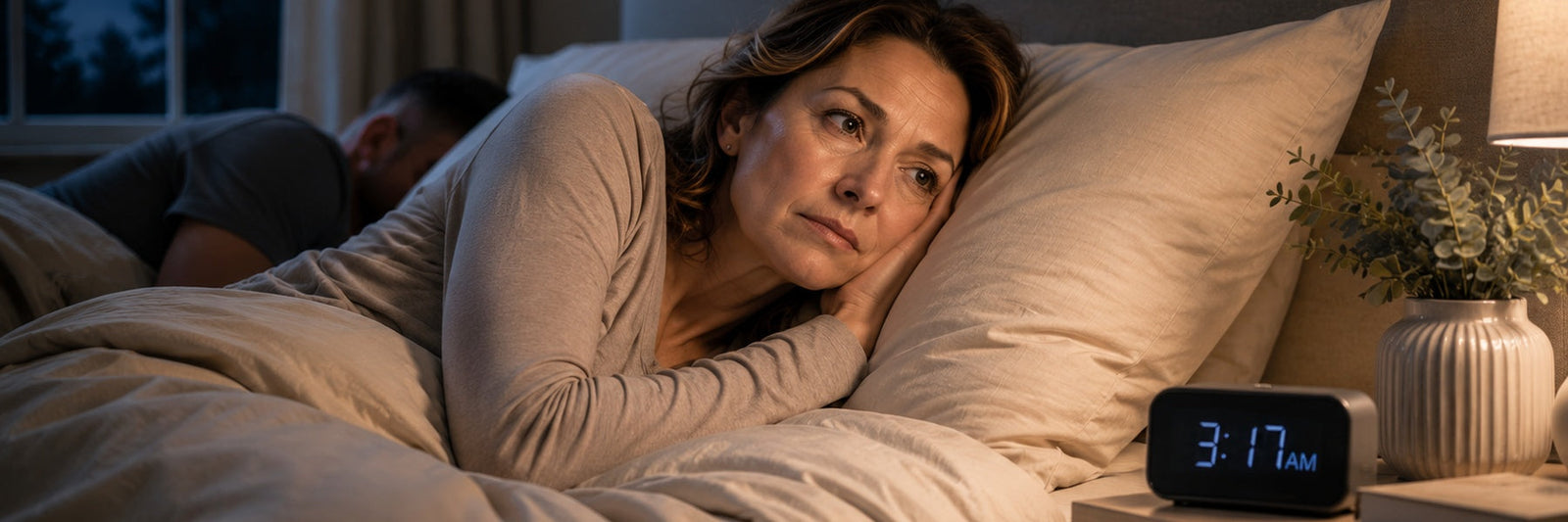
    Woman lying awake in bed at 3:17am while her partner sleeps, illustrating night waking and sleep disruption during perimenopause and menopause.

    If you're a woman in your late 30s, 40s or early 50s and you've suddenly started waking during the night, you're not alone.

    Many women notice their sleep changes long before they experience obvious hot flushes or stop having periods altogether.

    You may fall asleep easily but wake at midnight, 1:30am, 3am or 4:30am. Sometimes you wake once. Sometimes several times. Sometimes you wake hot. Sometimes your mind is racing. Sometimes you wake for no obvious reason at all.

    And despite spending enough hours in bed, you still wake feeling exhausted.

    Many women assume they are stressed, getting older or simply becoming poor sleepers.

    Sometimes that is part of the picture. But for many women, changing hormones may also be playing a role.

    Could Perimenopause Be Part of the Picture?

    One of the most common things I hear my female patients say is, "I've never had trouble sleeping before."

    In fact, sleep disruption is often one of the earliest signs that hormones are beginning to shift.

    During perimenopause, oestrogen and progesterone levels can become less predictable.

    As these hormones fluctuate, sleep can become more sensitive to things like stress, changes in body temperature, blood sugar fluctuations and a busy mind.

    This is why some women suddenly find themselves waking through the night even though they have never previously had sleep issues.

    Many women are surprised to learn that perimenopause can begin while periods are still occurring. You do not need to have stopped menstruating to experience hormone-related sleep disruption.

    If your sleep has changed and you're also noticing irritability, anxiety, hot flushes, brain fog, sugar cravings or weight gain, perimenopause may be worth considering.

    Why sleep suddenly changes during perimenopause

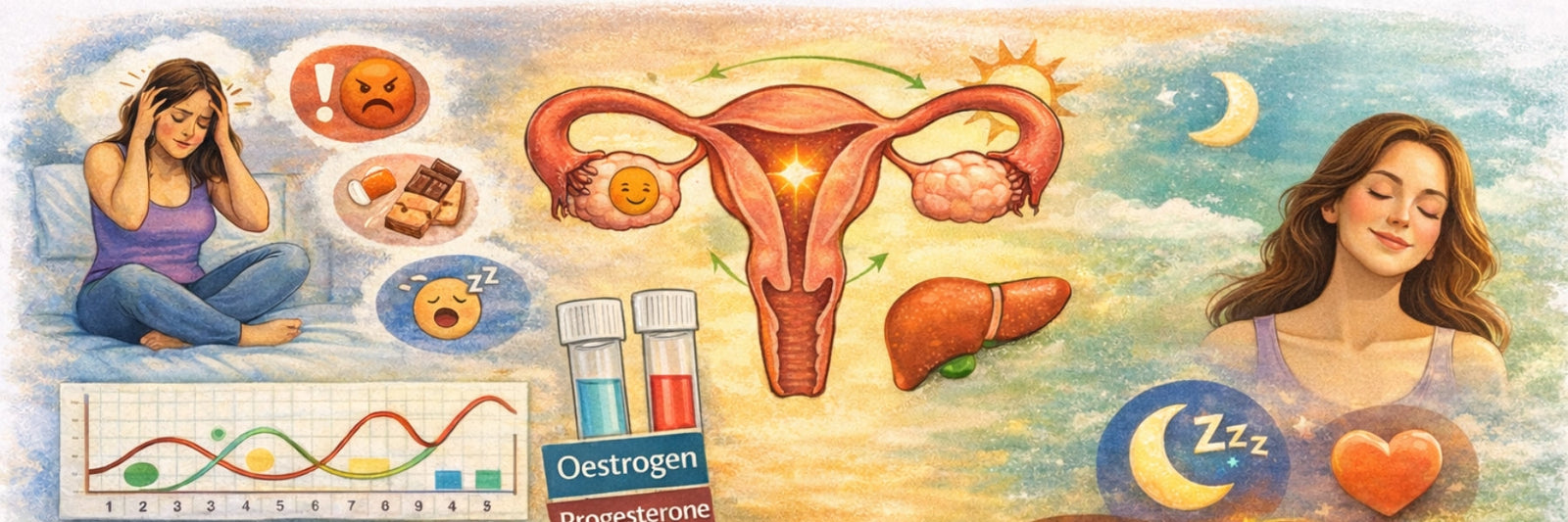
    Infographic showing how changing hormones during perimenopause can make sleep more sensitive to body temperature changes, stress and anxiety, blood sugar fluctuations and reduced sleep depth, leading to waking during the night.

    Waking Hot During the Night

    For some women, the problem is not getting to sleep.

    The problem is waking up feeling like someone has turned the heater on in the middle of the night.

    One minute you're asleep. The next minute you're throwing the blankets off, sticking a foot out of the bed, flipping the pillow over to the cool side or opening the window at 2am.

    Some women wake drenched in sweat. Others do not sweat much at all. They simply feel hot, restless and uncomfortable.

    You finally cool down, drift back to sleep, then wake up cold an hour later wondering what just happened.

    What catches many women off guard is that this can begin long before periods stop.

    Some women assume hot flushes only happen once menopause arrives. In reality, many women start noticing changes in body temperature during perimenopause while they are still having periods.

    You may find yourself feeling hotter than everyone else in the room. Sleeping with less bedding than you used to. Avoiding thick pyjamas. Turning the fan on more often. Or waking through the night because your body suddenly feels far warmer than it used to.

    Many women also notice certain things make it worse.

    A glass or two of wine. A stressful week. Several poor nights of sleep. Hot weather. Spicy food. Too much sugar. Sometimes all it takes is being overtired.

    This happens because changing hormone patterns can affect the brain's ability to regulate temperature. The body's comfortable temperature range becomes narrower, which means even small changes in body temperature can suddenly feel much bigger than they used to.

    That is why a warm room, a stressful day, a glass of wine or simply being overtired can leave some women lying awake, kicking off the blankets and wondering why they suddenly cannot stay asleep anymore.

    Waking With a Racing Mind

    For some women, the heat is not what keeps them awake.

    It's the sudden flood of thoughts that arrives the moment their eyes open.

    You wake up and within seconds your mind is off and running.

    You start thinking about work. The kids. Money. That conversation you had yesterday. The thing you forgot to do. What needs doing tomorrow. What you should have said. What you should not have said.

    Sometimes it feels like your brain is trying to solve every problem in your life between 2am and 4am.

    The frustrating part is that you are exhausted.

    Your body wants to sleep, but your mind refuses to cooperate.

    You look at the clock and think, "If I can fall asleep right now, I'll still get four hours." Then you check again and another hour has disappeared.

    Part of the reason this may become more common during perimenopause involves progesterone.

    Progesterone does far more than regulate the menstrual cycle. It also has calming effects on the nervous system and helps support GABA activity in the brain.

    GABA is one of the body's main calming neurotransmitters. It helps slow things down, supports relaxation and helps the brain transition into sleep.

    As progesterone begins fluctuating or declining during perimenopause, some women notice they feel more easily overwhelmed, more emotionally reactive and less able to properly switch off at night.

    Stress can make this even worse.

    Most women have experienced it at some point. You've had a busy day. Too much on your plate. Too much to think about. Maybe you've had a glass of wine, spent too long scrolling on your phone or simply pushed through one too many exhausting days.

    Instead of slowing down at bedtime, your brain seems to speed up.

    That is why many women find themselves lying in bed desperately wanting to sleep while their brain keeps running laps around the room.

    If this sounds familiar, keep reading. Many women who wake with a racing mind also discover they fit one or more of the other patterns below.

    Why Do I Wake Up Waking Suddenly Alert?

    Some women notice a different pattern altogether.

    They are not waking because they are hot.

    Their mind is not necessarily racing.

    But they seem to wake at almost exactly the same time every night.

    For some women it is 1am. For others it is 2am, 3am or 4am.

    After a while, the pattern becomes almost predictable. You wake up, glance at the clock and think, "Why is it always this time?"

    Many women find this one of the most frustrating sleep patterns because there does not seem to be an obvious reason for it.

    One possible reason involves how the body manages energy while you sleep.

    Throughout the night, your body is constantly monitoring and adjusting things such as blood sugar levels, hormone levels and energy requirements.

    If blood sugar levels begin falling too low, the body responds by releasing stress hormones such as cortisol and adrenaline.

    Think of it as an internal alarm system.

    The body recognises that blood sugar is dropping and quickly takes action to bring it back up again.

    One way it does this is by signalling the liver to release stored glucose back into the bloodstream.

    While this process is designed to protect you, the release of cortisol and adrenaline can suddenly wake you from sleep.

    You may wake with a racing heart, feeling alert, restless, anxious or wide awake for no obvious reason.

    Once adrenaline is circulating, its stimulating effects can make falling back asleep much more difficult, even when you're physically exhausted.

    Waking More Easily Than You Used To

    Some women notice they simply cannot sleep as deeply as they once did.

    They used to sleep through thunderstorms.

    Now the dog moves and they wake.

    Their partner rolls over and they wake.

    A noise outside wakes them.

    It can feel as though you're sleeping with one eye open.

    The important thing to understand is that the noises are not new.

    The dog probably moved before. Their partner probably rolled over before. The house probably made noises before.

    The difference is that deeper sleep used to keep those things in the background.

    When sleep is deep and restorative, the brain is less reactive to what is happening around you. Small noises, movement and normal household sounds are more likely to stay in the background.

    But when sleep becomes lighter, the brain sits closer to the surface.

    Things that once went unnoticed can suddenly become enough to wake you.

    This can happen for several reasons. Changing hormones, stress, blood sugar fluctuations, alcohol, low magnesium, low glycine or a nervous system that has not properly switched off may all affect how deeply you sleep.

    Over time, this can become a frustrating cycle.

    The lighter your sleep becomes, the easier it is to wake.

    And the more often you wake, the harder it can be to drop back into deep, restorative sleep again.

    That is why some women spend enough hours in bed but still wake feeling as though they have barely slept.

    Which Type of Night Waker Are You?

    If you wake... Consider
    Hot and sweaty Peri-Menopause Support or Menopausal Support
    With a racing mind Be Calm or Cortisol Calm
    Wake suddenly with a racing heart or feeling wide awake BSL Balance
    A light sleeper Sleep Support, Glycine or MagExcel

    Many women identify with more than one of these patterns.

    You may wake hot one night, wake with a racing mind the next, or find several of these patterns overlap.

    The important thing is understanding what is driving your sleep disruption.

    Once you understand why you are waking, it becomes much easier to choose the most appropriate support.

    Could Sleep Be Just One Piece of the Puzzle?

    For many women, waking during the night is only the beginning.

    Sleep changes are often accompanied by hot flushes, anxiety, brain fog, sugar cravings, weight gain, mood changes or simply feeling like they're not coping as well as they used to.

    If any of that sounds familiar, our Perimenopause and Menopause Guide explains how changing hormones can affect far more than just your sleep.

    Read the Perimenopause & Menopause Guide →
    Greg Newson
    Greg Newson

    Leave a comment

    Comments will be approved before showing up.


    Also in Health Articles

    Perimenopause and Menopause: Why You're Not Coping Like You Used To | NatroVital
    Perimenopause and Menopause: Why You're Not Coping Like You Used To

    by Greg Newson 46 min read

    Perimenopause and menopause can affect far more than just the menstrual cycle. Many women notice broken sleep, hot flushes, anxiety, brain fog, weight changes, lower stress tolerance and feeling constantly exhausted or overwhelmed long before periods stop completely. This article explains why these changes happen, how hormones, cortisol, sleep, the nervous system and inflammation all connect, and where natural support may help.

    Read More
    Why Your Period Has Changed (PMS, Heavy Bleeding & Irregular Cycles Explained) | NatroVital
    Why Your Period Has Changed - PMS, Heavy Bleeding & Irregular Cycles Explained

    by Greg Newson 36 min read

    If PMS or period symptoms make you feel unlike yourself every month, it’s not “just hormones”.

    PMS symptoms like irritability, anxiety, breast tenderness, cravings, headaches, breakouts, pain, heavy bleeding or clots usually reflect how well the cycle is functioning underneath — especially ovulation strength, progesterone rise after ovulation, stress load, blood sugar stability, inflammation, and how efficiently used hormones are cleared. This article helps you pinpoint where symptoms begin in your cycle, what that usually means in the body, and how to start with the most relevant layer of support.

    Read More
    PCOS: Why Ovulation Isn’t Happening — and What That Does to Your Cycle | NatroVital
    PCOS and Ovulation: Why You’re Not Ovulating — and What It Means for Your Cycle

    by Greg Newson 32 min read

    PCOS isn’t just about cysts — it’s about ovulation, hormones, and how your body is communicating.

    This guide breaks down what may be disrupting ovulation in PCOS, including blood sugar fluctuations, ongoing stress, and patterns that interfere with egg development, and shows you a clear, step-by-step approach to supporting a more consistent menstrual cycle.

    Read More