
• Add description, images, menus and links to your mega menu

  • A column with no settings can be used as a spacer

  • Link to your collections, sales and even external links

  • Add up to five columns

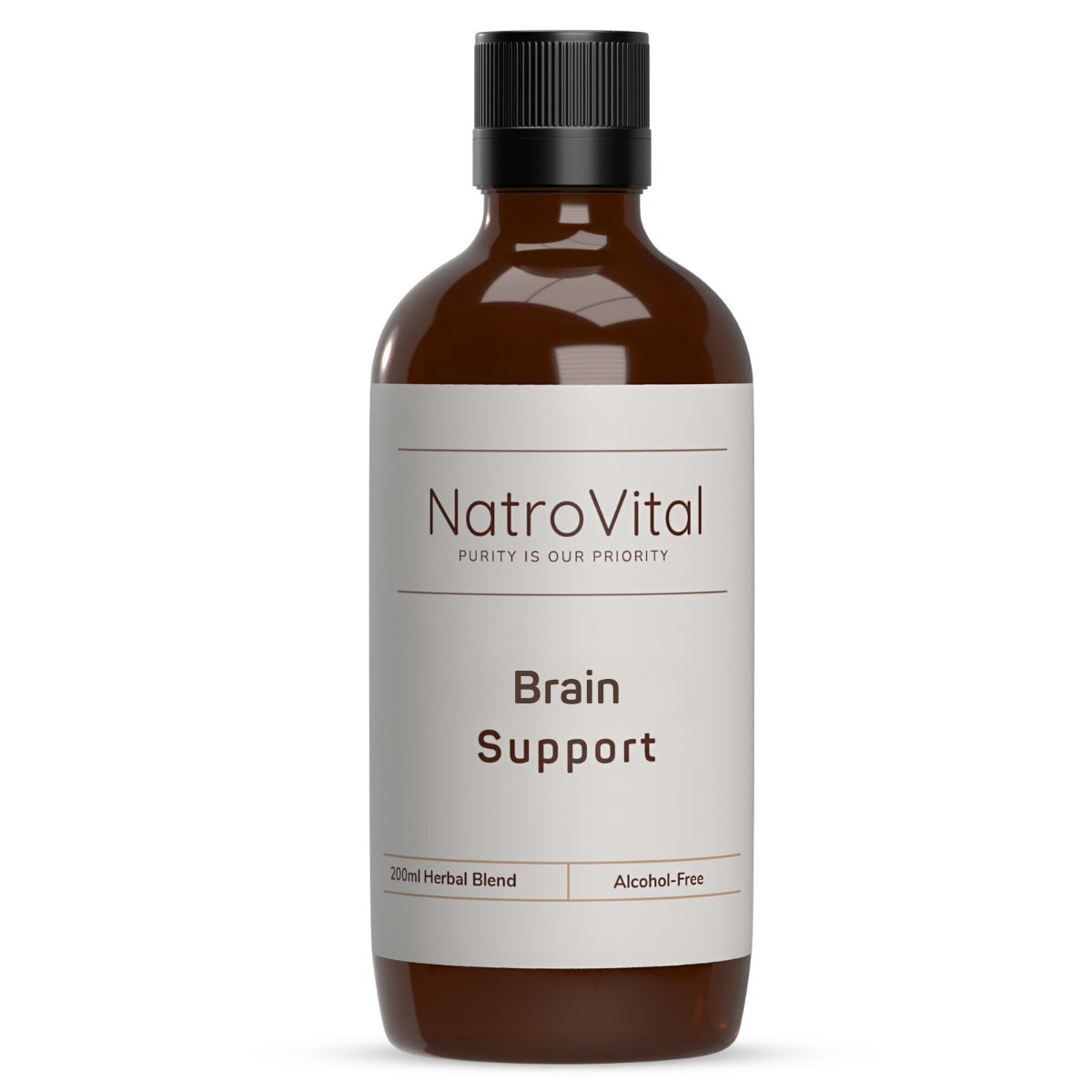
  • NatroVital Brain Support

    ✓ Stay Healthy — save 10% with subscription

    Auto-renews, skip or cancel anytime.

    To add to cart, go to the product page and select a purchase option
    • When Your Brain Doesn't Feel As Sharp As It Used To

      Most people expect their body to slow down as they get older, but it can be far more unsettling when it starts happening to their memory, concentration and ability to think clearly.

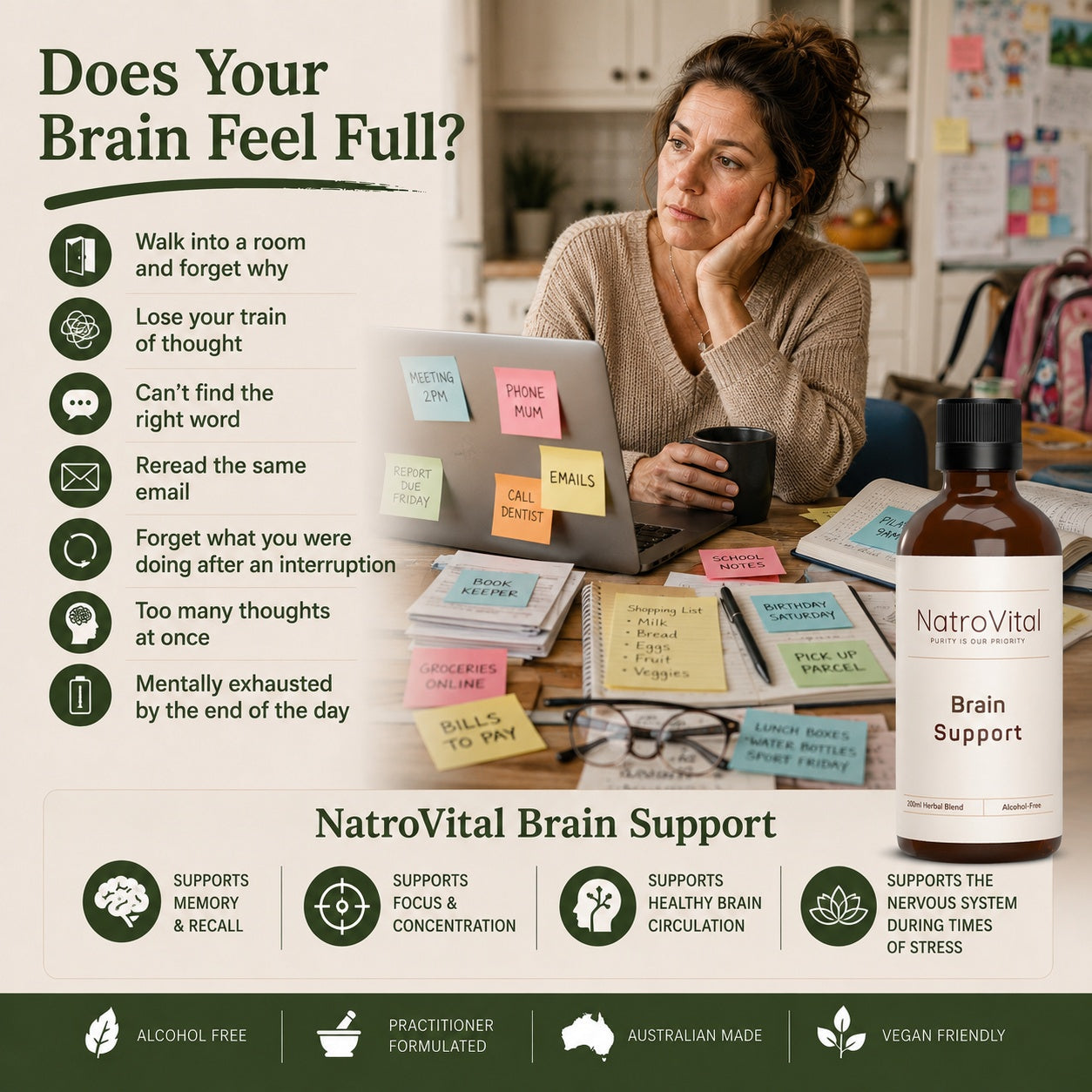
      At first, the changes are usually small. You walk into a room and forget why you went there. You open your phone to do something, only to realise you've forgotten what it was. You lose your train of thought halfway through a conversation. A word or name you know well sits just out of reach, and for a few seconds, your mind feels blank.

      Soon you begin noticing it throughout the day. You read the same email two or three times before it sinks in. Someone interrupts you halfway through a job and, a few minutes later, you can't remember what you were doing. You lose focus more easily, become distracted, make little mistakes you normally wouldn't, or find yourself taking much longer to finish jobs that once seemed easy.

      Many people put these changes down to getting older. Others blame stress, poor sleep, menopause, a busy lifestyle or simply having too much on their mind. While any one of these can affect how the brain functions, they often produce very similar changes.

      Often they aren't separate problems at all. They're simply different ways the brain responds when it's under more pressure than it has had the chance to recover from.

      As a result, many people become more forgetful. Concentrating takes more effort. They lose their train of thought more easily, struggle to find the right words, make small mistakes they normally wouldn't, or describe it as "brain fog".

      Why Your Brain Can Start Feeling Full

      Have you ever had one of those days where you feel like, if one more person asks you a question, one more email lands in your inbox, or one more problem needs solving, your head might explode?

      By the end of the day, your brain feels full. Not physically full, but as though there's simply no room left to think clearly.

      Most people assume this means their memory is getting worse. But that's not always what's happening.

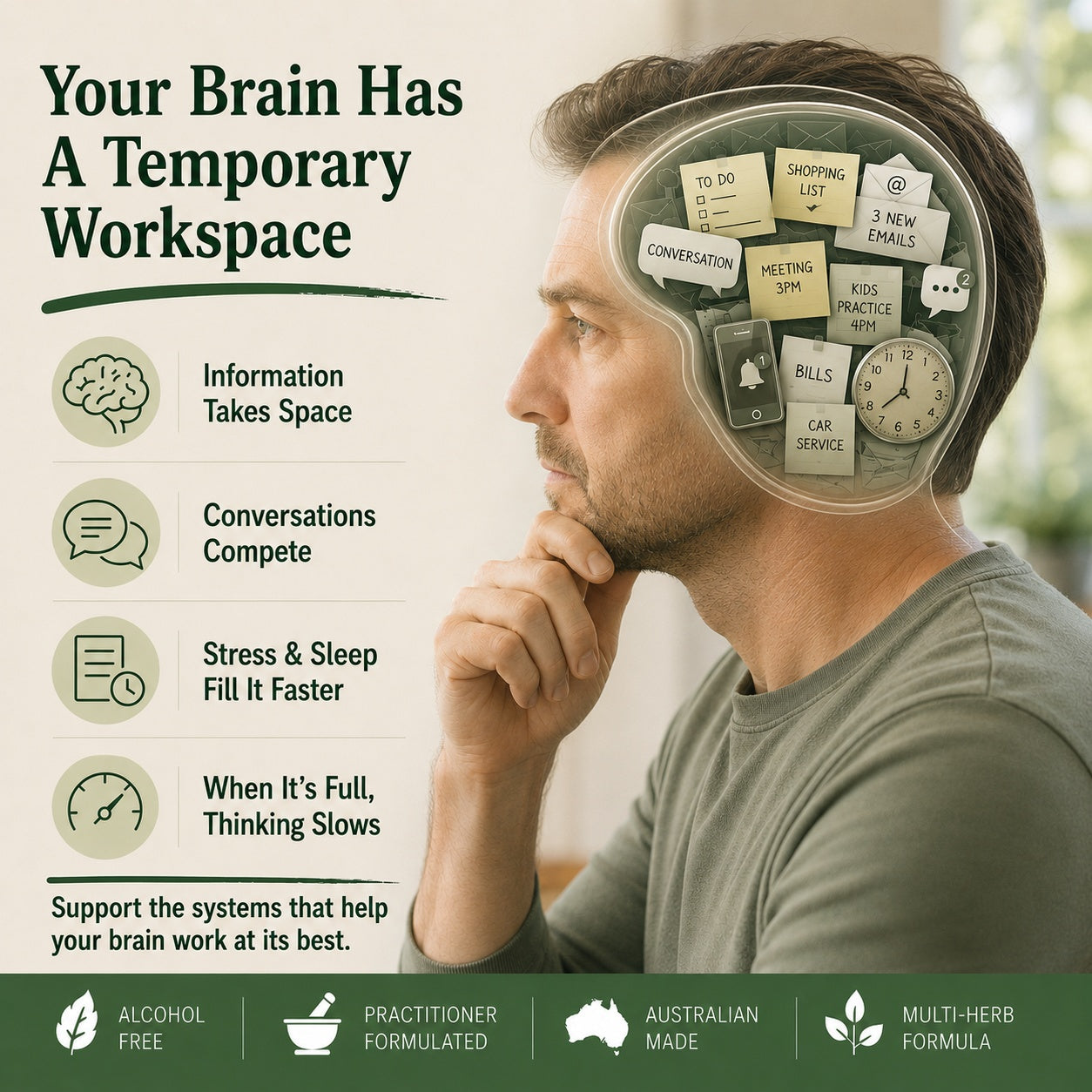
      Your brain doesn't just store memories. It also has a temporary mental workspace where it holds information while you're using it. Every conversation you follow, every email you answer, every decision you make, every interruption you deal with and every problem you solve all compete for space in that workspace.

      Think of it like a computer. With only a few programs open, everything runs quickly and smoothly. But open dozens of browser tabs, spreadsheets, emails and apps all at once, and before long the whole computer begins to slow down.

      Your brain can feel much the same way.

      Many different factors can affect how efficiently the brain works, including stress, poor sleep, hormonal changes, alcohol, poor nutrition, nutritional deficiencies, constant interruptions and an ever-growing mental load. Stress, constant interruptions and an increasing mental load can gradually fill the brain's temporary mental workspace, making concentration take more effort, clear thinking become harder, and remembering things that once came easily suddenly feel frustrating.

      That doesn't necessarily mean your memory is failing. Sometimes it simply means your brain has been carrying more than it has had the chance to clear, recover from and organise.

      Does This Sound Familiar?

      You don't need to experience every one of these. But if you're nodding your head as you read through the list, there's a good chance your brain has been under more pressure than you realise.

      • I know the word I want to say, but I just can't find it.
      • I have to reread emails or pages because they don't sink in the first time.
      • I start one job, get distracted, then forget what I was originally doing.
      • I put something down "just for a second" and then spend five minutes trying to find it again.
      • I find it harder to concentrate when people are talking around me.
      • By the end of the day my brain feels exhausted, even though I haven't done anything physically demanding.
      • I make little mistakes that I wouldn't normally make.
      • I feel like I have too many thoughts competing for my attention at once.
      • Some days it feels like my brain just isn't firing on all cylinders.
      • I know I'm capable of more, but my thinking just doesn't seem as clear as it once was.

      Why Clear Thinking Involves More Than Memory

      Long before brain scans, neuroscience and modern medicine, herbal practitioners understood that clear thinking involved much more than simply having a good memory. They recognised that concentration, learning, recall, mental clarity and the ability to stay focused were all influenced by the health of the brain and nervous system working together.

      Some herbs became highly respected because they were traditionally used by scholars, students and older people wanting to maintain a sharp mind. Others were valued because they recognised that an overloaded or restless mind often struggles to think clearly.

      That understanding sits at the heart of NatroVital Brain Support. Rather than relying on a single herb for memory, we selected seven traditional herbs that have long been valued for supporting different aspects of healthy brain function. Some were traditionally used to support memory and learning, others for concentration, focus or healthy brain circulation, while others were chosen because an overworked nervous system often struggles to think clearly. Together, they create a more complete traditional approach to supporting clear thinking than any one herb could provide on its own.

      This formula is suitable for adults who no longer feel as mentally sharp as they once did—perhaps finding it harder to concentrate, struggling to stay focused, becoming more forgetful, or feeling mentally tired or foggy.

      The goal isn't simply to remember more. It's to feel mentally sharper again. To follow conversations without losing your train of thought. To stay focused on the task in front of you. To find the words you're looking for more easily. To finish the day feeling like your brain has kept up with you instead of holding you back.

      Please Note: NatroVital Brain Support is formulated using traditional herbal knowledge and we refer to the historical use of herbs when describing this product. If you are unsure whether this formula is suitable for your needs, please contact our clinic before purchasing.

      Want to know what’s in this formula?

      Continue to the Ingredients or read the Frequently Asked Questions.

    • Why These Herbs Were Chosen

      Most people think memory is simply about remembering things. But that's only one part of how the brain works. To stay mentally sharp, the brain also needs to concentrate, stay focused, process new information and recall it when it's needed.

      Traditional herbal practitioners recognised this centuries ago. Rather than focusing on memory alone, they selected herbs to support the different parts of brain and nervous system function that work together every time you think, learn, concentrate or remember.

      Because no single herb can support every aspect of brain function, traditional herbal practitioners often combined herbs with different strengths. Some were valued for memory and learning, others for concentration and mental performance, some for supporting healthy brain circulation, while others were chosen to help settle an overworked or overstimulated nervous system. Together, they formed a more complete approach to supporting the brain than any one herb could provide on its own.

      Herbs Traditionally Used to Support Memory, Learning and Recall

      • Organic Bacopa (Bacopa monnieri)
      • Organic Sage (Salvia officinalis)
      • Organic Rosemary (Rosmarinus officinalis)
      • Organic Ginkgo (Ginkgo biloba)

      These herbs have long been associated with memory, learning and recall. Bacopa has traditionally been used in Ayurvedic medicine by students and scholars, while sage and rosemary have been valued since ancient Greek and Roman times for remembrance and mental sharpness. Ginkgo has also been traditionally used to support memory and cognitive function, particularly as people grow older.

      Herbs Traditionally Used to Support Focus and Concentration

      • Organic Bacopa (Bacopa monnieri)
      • Organic Gotu Kola (Centella asiatica)
      • Organic Ginkgo (Ginkgo biloba)
      • Organic Rosemary (Rosmarinus officinalis)
      • Organic Sage (Salvia officinalis)

      Memory is only useful when the brain can first pay attention to what is happening. If you are distracted, mentally overloaded or struggling to stay focused, information may never be properly taken in, which can later feel like a memory problem.

      Herbs Traditionally Used to Support Healthy Brain Circulation

      • Organic Ginkgo (Ginkgo biloba)
      • Organic Rosemary (Rosmarinus officinalis)
      • Organic Gotu Kola (Centella asiatica)

      The brain depends on a constant supply of blood to deliver oxygen and nutrients to billions of brain cells every minute. Unlike many other organs, it has very little capacity to store these essentials, so healthy circulation plays an important role in keeping the brain functioning efficiently.

      Herbs Traditionally Used to Support the Brain and Nervous System During Times of Stress

      • Organic Green Oats / Oatstraw (Avena sativa)
      • Organic Skullcap (Scutellaria lateriflora)
      • Organic Bacopa (Bacopa monnieri)
      • Organic Gotu Kola (Centella asiatica)

      Not every lapse in concentration begins with memory itself. Sometimes the brain is simply mentally tired from constantly processing information. Ongoing stress, constant interruptions, poor sleep and the demands of everyday life can leave both the brain and nervous system feeling overworked. As a result, concentration becomes harder, thinking slows, and remembering even simple things can take more effort than it once did.

      Why We Use Liquid Herbal Extracts

      • Only the concentrated herbal compounds are extracted—not the bulk plant fibre found in powders, tablets and capsules
      • Rapid absorption through the tissues of the mouth and digestive tract
      • Does not rely solely on digestion to begin delivering herbal compounds
      • No synthetic fillers or binders
      • No bulking agents
      • No artificial flavours or sweeteners
      • No unnecessary additives
      • 100% alcohol-free formula

      Unlike powders, capsules and tablets that contain the entire dried herb, our liquid extracts contain only the concentrated plant compounds extracted during our manufacturing process. This allows the herbal constituents to begin interacting with the body from the moment they enter the mouth, without relying entirely on digestion to break down tablets, capsules or plant fibre first.

      Our Commitment to Purity

      • Vegetable Glycerine: Used as a natural preservative and sweetener without the need for artificial additives.
      • Purified Grander Water: Free from chlorine and fluoride, providing a clean base for our herbal extracts.
      • 100% Alcohol-Free: Alcohol is removed after extraction using a low-temperature vacuum process before being replaced with vegetable glycerine and purified water.
      • Vegan & Allergen-Free: Free from gluten, dairy, eggs, soy, nuts, corn, yeast, artificial colours, flavours and preservatives.

      How NatroVital Brain Support Is Made

      We begin with a pharmaceutical-grade alcohol extraction to draw out the broad spectrum of active plant compounds from the raw herbs. Once extraction is complete, the alcohol is gently removed under vacuum at low temperatures to help preserve the integrity of the herbal constituents.

      The concentrated extract is then blended with vegetable glycerine and purified Grander water to create a clean, stable, alcohol-free herbal tonic.

      Every bottle is formulated and produced by us in Australia using small-batch manufacturing methods that prioritise purity, quality and attention to detail.

      Active Herbal Ingredients Per Serve

      Each 1mL of NatroVital Brain Support contains the equivalent of 500mg of dried herbal material. This concentration provides a consistent level of traditional herbal support for memory, learning, recall, focus, concentration, mental clarity, healthy brain circulation and nervous system function.

      Want to learn more about the fillers, binders, coatings and additives commonly used in supplements? Read our guide on The Truth About Excipients.

      Still have questions?

      Read our Frequently Asked Questions for dosage information, common combinations and answers to the questions we're most often asked in clinic.

    • NatroVital Brain Support Common Questions

      What is the recommended dosage for NatroVital Brain Support?
      For adults, the typical dosage is 7.5ml twice daily. During particularly busy or mentally demanding periods, 10ml may be taken two to three times daily if needed.

      For children under 7 years of age, the typical dosage is 2.5ml twice daily. Children aged 7 to 14 years may take 5ml twice daily.

      Dosages may vary depending on individual needs and practitioner guidance.
      How should I take Brain Support?
      Measure the recommended dosage and mix with a small amount of water or juice. Drink the entire mixture, including any residue, to ensure full herbal benefit.
      Why can I remember something from 20 years ago but forget what I was about to do?

      These two types of remembering rely on different parts of brain function. An old memory has already been stored, whereas remembering why you walked into a room, what you were about to say, or what you intended to do next depends on the brain holding information temporarily while you use it.

      That temporary mental workspace is easily disrupted by stress, poor sleep, interruptions, hormonal changes or having too many things competing for your attention. The information may disappear before it has been properly processed or stored.

      Why do I suddenly struggle to find the right word?

      Most people have experienced that frustrating moment when a familiar word or someone's name sits on the tip of their tongue, but just won't come out. A few minutes later it often pops into your head as though nothing had happened.

      Finding the right word is one of the brain's more complex jobs. It needs to search, select and retrieve the information almost instantly. Mental fatigue, stress, poor sleep, constant interruptions and an overloaded mind can all make that process feel slower, even when the information is still there.

      What exactly is brain fog?

      Brain fog isn't a medical diagnosis. It's simply the term many people use when their thinking doesn't feel as clear or sharp as it normally does. Some describe it as feeling mentally cloudy, others say their brain feels slow, foggy or as though they're thinking through cotton wool.

      Brain fog can make it harder to concentrate, stay focused, find the right words, make decisions, follow conversations or remember information you've only just been told. Many different factors can contribute to it, including ongoing stress, poor sleep, hormonal changes, mental fatigue and simply trying to juggle too much information at once.

      Why is my concentration so much worse when I'm stressed?

      Stress doesn't just affect your mood. It can also make it much harder to concentrate. Many people notice they lose their train of thought more easily, have to reread the same page several times before it sinks in, become more easily distracted, or struggle to stay focused on one task for very long.

      When your mind is already occupied with deadlines, worries, decisions and constant interruptions, there's simply less attention available for the task in front of you. Even though your memory may be perfectly normal, concentrating, learning new information and recalling it later can all become more difficult.

      Why do I forget what I was doing every time someone interrupts me?

      Your brain can only hold a limited amount of information in its temporary mental workspace at any one time. When you're interrupted, that information has to compete with whatever has just demanded your attention.

      If the interruption is long enough or your mind is already overloaded, the original thought can simply disappear. That's why you can walk away to answer a question or take a phone call, then return a few minutes later with no idea where you were up to.

      Is it normal to become more forgetful as you get older?

      Many people notice changes in memory as they get older, but age is only one of the many factors that can influence how well the brain performs.

      Poor sleep, ongoing stress, hormonal changes, poor diet, nutritional deficiencies, alcohol, mental fatigue, an overwhelming workload and simply trying to process too much information every day can all affect how well the brain functions. For many people, these factors have a much bigger influence than age alone.

      Can poor concentration make it seem like I have a bad memory?

      Yes. Before your brain can remember something, it first has to notice it. If your attention is elsewhere, you're distracted, or you're trying to do several things at once, the information may never be properly taken in.

      People often describe this as having a poor memory, when in reality the information may never have been stored in the first place. That's one reason concentration and attention are just as important as memory itself.

      Can poor sleep affect my memory and concentration?

      Absolutely. Many people notice they're more forgetful, find it harder to concentrate or struggle to think clearly after a poor night's sleep. Even simple tasks can seem to take more effort than they normally would.

      Sleep gives the brain time to recover from the day's mental workload. When sleep is regularly interrupted or insufficient, it's common to notice changes in attention, concentration and memory the following day.

      Why do I feel mentally exhausted when I haven't done anything physical?

      Your brain never really stops working. Throughout the day it's constantly processing information, making decisions, solving problems, concentrating, remembering, planning and adapting to whatever life throws at you. Even while you sleep, your brain remains active, processing information and carrying out important housekeeping tasks.

      By the end of a mentally demanding day, it's quite possible to feel completely exhausted even though you've barely left your chair. As mental fatigue builds, many people notice they become less focused, more forgetful and find it harder to think clearly.

      Why does it take me longer to process information than it used to?

      Many people notice they can still complete the same tasks they've always done, but they need more time to do them. They may lose their train of thought more often, become distracted more easily, or need to reread information before it sinks in.

      That doesn't necessarily mean you've become less capable. It may simply reflect that your brain is having to work harder to process, organise and hold onto information while juggling everything else that's demanding your attention.

      Why do I find it harder to make decisions than I used to?

      Your brain makes thousands of decisions every day, many without you even realising it. Some are simple, like what to have for breakfast, while others require concentration, planning and careful thought.

      As mental fatigue builds throughout the day, even small decisions can begin to feel surprisingly difficult. Many people notice they become more indecisive, put off making decisions altogether, or feel mentally drained by choices that once seemed straightforward.

      Can menopause affect memory and concentration?

      Yes. Many women notice changes in memory, concentration and word finding during perimenopause and menopause. They may describe it as brain fog, feeling mentally slower, losing their train of thought more easily or struggling to remember simple things.

      Hormonal changes are only one part of the picture. Sleep disruption, stress, hot flushes and the extra demands of everyday life can all place additional pressure on the brain, making it harder to stay focused and process information efficiently.

      Can alcohol affect memory and brain function?

      It can. Many people notice they're less mentally sharp after drinking alcohol, even if they don't feel hungover. They may find it harder to concentrate, think clearly or remember things the following day.

      How much alcohol affects brain function varies from person to person, but regular alcohol consumption, particularly when combined with poor sleep or ongoing stress, can have a noticeable impact on memory, concentration and mental performance.

      Can poor nutrition affect memory and concentration?

      Yes. Although the brain accounts for only about 2% of your body weight, it uses around 20% of your body's energy at rest. That's an enormous demand for such a small organ, so it depends on a constant supply of oxygen and nutrients to function efficiently.

      A poor diet, nutritional deficiencies, inadequate protein intake or simply not eating enough can all affect how well the brain works. Looking after your nutrition is just as important as supporting your brain with quality sleep, regular physical activity and appropriate herbal support.

      Why do I remember someone's face but forget their name?

      Recognising a familiar face and remembering a person's name are handled differently by the brain. That's why it's quite common to know exactly who someone is while completely drawing a blank on their name.

      This often becomes more noticeable during times of stress, mental fatigue or when your attention is divided. The information is frequently still there, but retrieving it quickly becomes more difficult.

      Can I do anything to help keep my brain sharp as I get older?

      Yes. Keeping your brain active is much like keeping the rest of your body active. Regular mental stimulation, quality sleep, physical activity, good nutrition, social interaction and managing stress all help support healthy brain function throughout life.

      Traditional herbal medicine may also play a role. Many herbs have long been used to support memory, concentration, healthy brain circulation and nervous system function as part of a broader approach to maintaining cognitive health.

      How long does it usually take to notice a difference?

      Everyone is different. Some people notice changes within the first few weeks, while for others the improvements are more gradual. How quickly you notice a difference often depends on factors such as stress levels, sleep quality, nutrition, overall health and how long the symptoms have been present.

      Traditional herbal medicine is generally used to support the body over time rather than provide an instant effect, so consistent daily use usually gives the best results.

      What other nutrients and supplements work well with Brain Support?

      Yes. Brain Support is often combined with other supplements depending on why you're experiencing changes in memory, concentration or mental performance.

      NatroVital B-Complete is commonly chosen when poor nutrition, ongoing stress or increased mental demands may have increased the body's need for B vitamins, which play important roles in energy production and normal nervous system function.

      NatroVital Cortisol Calm may be a suitable companion when ongoing stress, poor sleep or feeling constantly "wired" appears to be affecting concentration and clear thinking.

      NatroVital MagExcel provides magnesium, a mineral involved in hundreds of biochemical processes throughout the body, including normal nervous system and muscle function.

      NatroVital OmegaCare Plus provides omega-3 fatty acids, which form an important structural component of brain tissue and are often included as part of a broader approach to supporting healthy brain function.

      What makes herbal tonics different from capsules, tablets, or powders?
      NatroVital Brain Support is a liquid herbal tonic made without synthetic fillers, binders, bulking agents, preservatives, flavours, or sweeteners—ingredients commonly found in capsules, tablets, and powders. Because it’s alcohol-free and doesn’t require digestion, it delivers fast-absorbing, concentrated herbal extracts in their purest form. You get only what the body needs—nothing unnecessary or artificial.

      Want to know more about what’s really in your supplements? Read our blog on excipients here.
      Why choose NatroVital over other supplement brands?

      NatroVital is a proudly Australian-owned and operated business, created by Greg Newson—a qualified naturopath, herbalist, and nutritionist with over 20 years of clinical experience. NatroVital was born out of frustration with the supplement industry. Too many products were loaded with synthetic fillers, binders, sweeteners, and unnecessary additives that offered little benefit—and often stood in the way of genuine healing.

      At NatroVital, we believe that what’s left out of a supplement is just as important as what goes in. That’s why every one of our herbal tonics is made using only pure, concentrated herbal extracts—nothing more. All of our products, including Brain Support, are formulated and produced at our own facility here in Australia. We're a small, family-run business committed to clean, honest, and effective natural health solutions you can trust.

      Is Brain Support suitable for vegetarians and vegans?
      Absolutely. NatroVital Brain Support is 100% plant-based and free from animal-derived ingredients, making it suitable for both vegetarians and vegans.
      Are there any precautions or interactions to be aware of?
      While the herbs in Brain Support are traditionally well-tolerated, please be aware of the following considerations:

      Anticoagulant and antiplatelet medications: Ginkgo and Rosemary may influence blood clotting and circulation. Use caution when combining with blood-thinning or antiplatelet medications, anti-inflammatory medications, before surgery, or in individuals with bleeding disorders.
      Sedative or sleep medications: Bacopa and Skullcap may have calming effects and could increase drowsiness when combined with sedatives, sleep medications.
      Blood pressure medications: Rosemary may affect circulation and blood pressure regulation. Use caution when combining with blood pressure medication.
      Pregnancy, breastfeeding, epilepsy or seizure disorders: Sage should be used with caution unless professionally advised.
      Reflux or digestive sensitivity: Rosemary may aggravate reflux symptoms in sensitive individuals. Bacopa may occasionally cause digestive upset in some people.
      Allergies: Avoid if you are allergic or sensitive to any of the listed ingredients.

      Always consult your practitioner if you’re on medication, have a health condition, or are unsure if this tonic is suitable for you.
      Is NatroVital Brain Support a therapeutic medicine?
      NatroVital Brain Support is made using traditional herbal knowledge and is professionally formulated by qualified health practitioners. It is not listed with the Therapeutic Goods Administration (TGA) and does not claim to diagnose, treat, cure, or prevent any medical condition.

      This tonic is designed to support memory, focus, concentration, mental clarity and healthy cognitive function through traditional herbal practice. Please consult your healthcare provider if you’re unsure whether this tonic is right for your needs.

      In Australia, only products that are listed or registered with the Therapeutic Goods Administration (TGA) are permitted to make therapeutic claims. As NatroVital Brain Support is not TGA-listed, we are unable to state specific health outcomes—even when supported by traditional use or research. Instead, we explain how herbs have been traditionally used in herbal medicine so you can make informed decisions about your health.
      Why isn’t NatroVital Brain Support listed with the TGA?
      We’ve chosen not to list this product with the Therapeutic Goods Administration (TGA) so that we can continue to speak openly about the long-standing traditional uses of herbs. TGA listing brings strict language restrictions that often prevent us from sharing this knowledge clearly. It also requires manufacturing on a much larger scale through licensed facilities, along with substantial initial and ongoing registration costs. These factors significantly increase production expenses and limit flexibility. By creating small-batch formulas using clean, high-quality ingredients, we’re able to keep our tonics affordable and stay true to our herbal roots—without compromising quality or integrity.

      Unlike large-scale TGA-licensed manufacturers, we create our tonics using a unique process that removes alcohol after extraction and replaces it with natural vegetable glycerin. This method preserves the herbal actives while creating a clean, alcohol-free final product. It’s a more labour-intensive process that isn’t offered by conventional manufacturers, but it allows us to stay true to our values of purity, quality, and making traditional herbal support affordable and available without compromise.

      Each NatroVital tonic is created with a hands-on approach that respects the living nature of the herbs. We believe that passion, care, and healing intention are just as important as the ingredients themselves—qualities often lost in large-scale, industrial production. Our small-batch methods honour traditional herbal wisdom while delivering pure, effective tonics crafted with purpose.

    Auto-renews, skip or cancel anytime.