


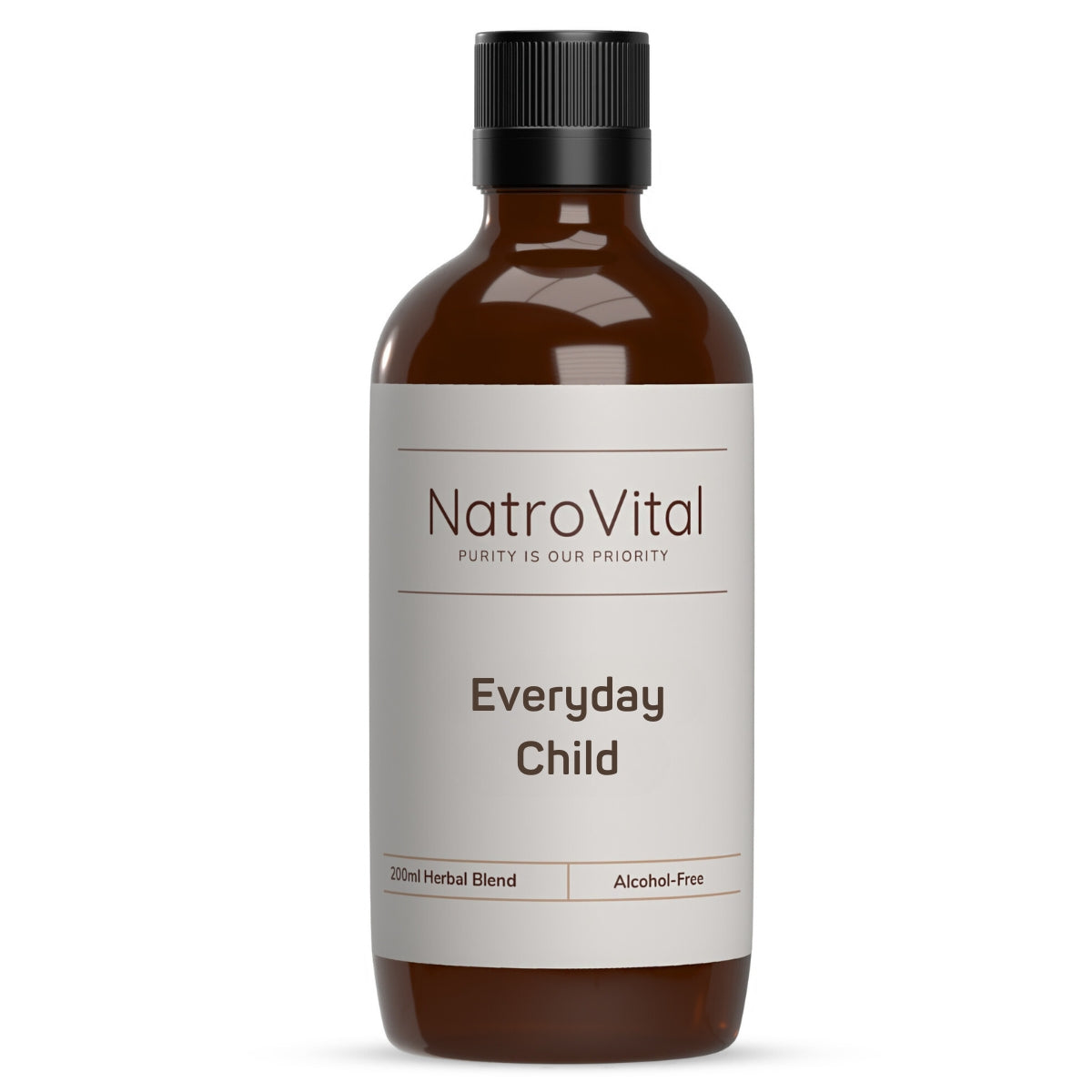

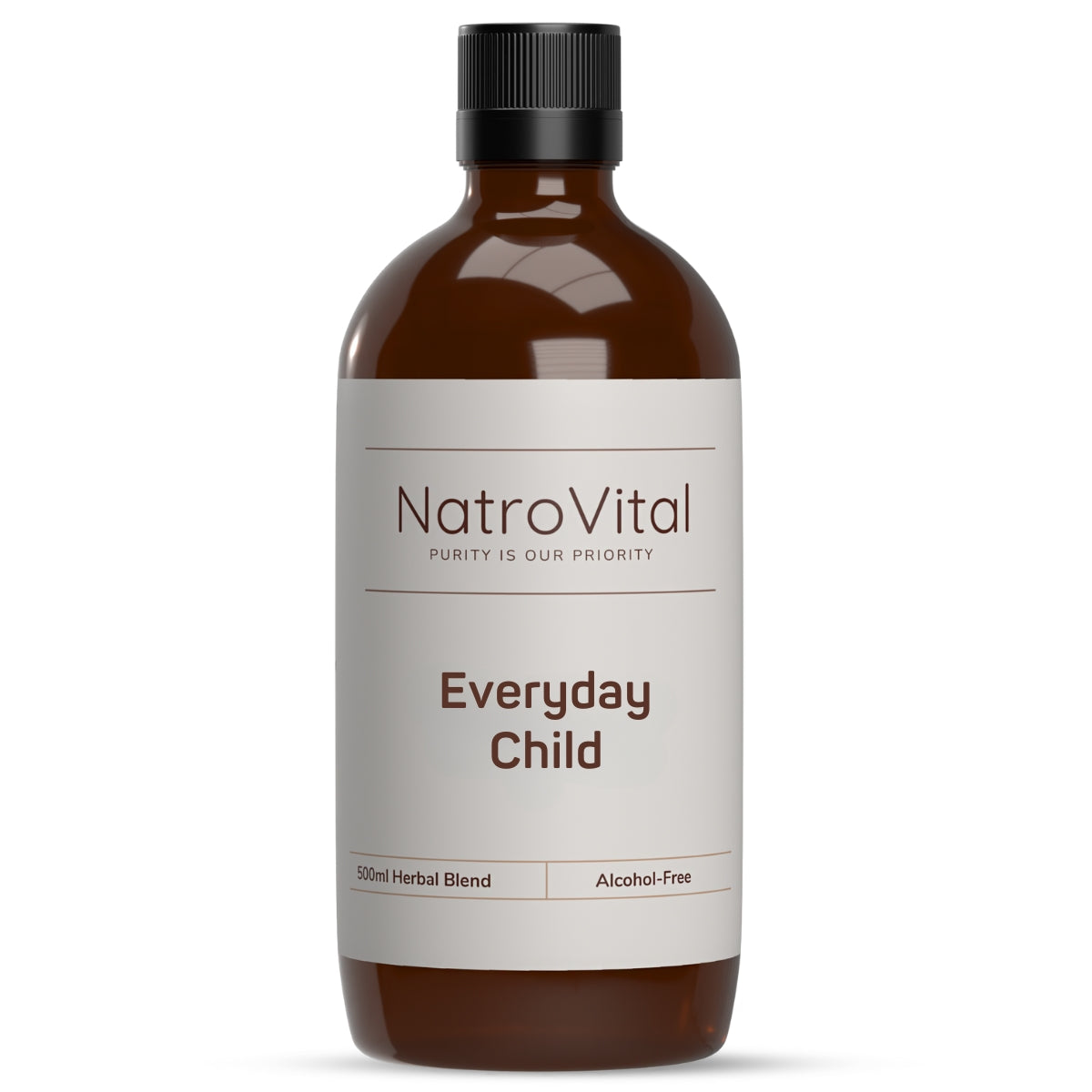








NatroVital Everyday Child
$53.20 - $125.96
NatroVital Everyday Child Tonic
-
Is Your Child Getting Everything They Need as They Grow?
Every parent wants to believe their child is eating well enough to support their growth and development.
But real life is not always that simple.
Some children happily eat a wide variety of foods. Others survive on toast, pasta, chicken nuggets or whatever they have decided they will eat that week. Vegetables are refused, lunches come home untouched and foods they happily ate last month are suddenly no longer acceptable.
Even children who generally eat well can go through stages when their appetite becomes unpredictable, they seem to grow overnight or school, sport and other activities place greater demands on their body.
As a parent, it is natural to wonder:
“Are they actually getting everything they need?”
Eating Enough Does Not Always Mean Getting Enough
Childhood is one of the fastest periods of physical and mental development your child will ever experience.
Their bones are lengthening, muscles are developing, new teeth are forming and their brain is constantly creating new connections as they learn, remember and make sense of the world around them.
At the same time, their immune system is still maturing, their digestive system must extract nutrients from the food they eat and their nervous system is learning how to respond to school, friendships, family changes and new experiences.
All of this requires a regular supply of nutrients. However, children do not choose food according to what their growing body requires. They choose according to appetite, taste, texture, familiarity and what they are prepared to accept that day.
A child can eat enough food to feel full without eating a broad enough variety to receive everything their growing body needs.
This Is Why Many Parents Reach for a Multivitamin
The reasoning seems straightforward. If your child may not be receiving enough nutrients from food, a multivitamin appears to be an easy way to help fill the gaps.
Most multivitamins contain vitamins and minerals produced in synthetic or highly processed forms. Nutrients sourced directly from whole foods or plants are less common because they are more expensive to produce and often appear in smaller amounts on the label than their synthetic equivalents.
These products may provide vitamin C, several B vitamins, zinc and other individual nutrients, but they largely deliver them as isolated components.
In food and plants, nutrients occur alongside antioxidants, flavonoids, polysaccharides and many other naturally occurring compounds. Traditional herbal medicine has used whole plants for generations, preserving this broader range rather than selecting one nutrient and discarding everything surrounding it.
What Is Nature’s Alternative to a Multivitamin?
Nature’s alternative to a multivitamin is not one particular herb, tablet or supplement. It is the wide variety of nutrients and naturally occurring compounds found across vegetables, fruits, whole grains, legumes, herbs, mushrooms, algae, nuts, seeds, grass-fed meat and wild-caught seafood.
In an ideal world, every child would eat a broad selection of these foods each day. In reality, even well-fed children may not consistently receive that range.
NatroVital Everyday Child was created to bring concentrated whole-herb extracts alongside the child’s existing diet. Rather than attempting to recreate a list of isolated vitamins, it combines a nutrient-rich food plant with herbs traditionally used to support immune health, energy and recovery, concentration, nervous system function and digestive comfort.
This provides a broader approach than supplying isolated vitamins and minerals alone. Moringa contributes the naturally occurring compounds found within a nutrient-rich food plant, while the other herbs have been selected for their traditional roles within a child’s everyday tonic. The aim is not to imitate a multivitamin label, but to combine nutritional and herbal support within one formula.
A conventional multivitamin primarily supplies individual nutrients. Everyday Child combines the nutritional value of a whole-food plant with traditional herbal support for the growing child.
Does This Sound Like Your Child?
You may recognise some of these patterns:
- Your child eats a limited or repetitive range of foods.
- Vegetables, fruit or protein-rich foods are regularly refused.
- School lunches often come home uneaten.
- Your child appears tired or flat despite sleeping reasonably well.
- They seem to catch every cold or illness passing through school or childcare.
- It takes them longer than expected to recover after being unwell.
- They struggle to concentrate or remain mentally engaged.
- They become restless, irritable or easily overwhelmed.
- They are moving through a noticeable growth spurt.
These signs do not automatically mean your child has a vitamin or mineral deficiency. However, when several occur together, it is understandable to question whether their current diet is providing enough variety for the demands being placed upon them.
Why NatroVital Everyday Child Was Formulated
NatroVital Everyday Child was created for parents looking beyond brightly coloured chewable tablets, flavoured powders and conventional synthetic multivitamins.
It brings concentrated liquid herbal extracts together in a practical tonic that is easy to measure and include in a child’s daily routine.
Unlike products containing ground herbs, bulk plant fibre or numerous manufacturing additives, Everyday Child contains the compounds extracted from the herbs in a clean liquid base.
It contains no artificial colours, flavours or sweeteners, no synthetic binders or unnecessary fillers, and is completely alcohol-free.
Everyday Child gives parents a clean and practical way to add concentrated whole-plant and herbal support during the years when their child is growing, learning and changing rapidly.
Ideal for girls under 13 and boys under 14 years of age. For older children and teenagers, consider our Everyday Woman or Everyday Male formulas.
Please Note: NatroVital Everyday Child has been professionally formulated using traditional herbal knowledge. The information on this page explains the traditional herbal principles behind this formula and is not intended to diagnose, treat, cure or prevent any medical condition. If you would like help deciding whether Everyday Child is the most suitable tonic for your child, please contact our clinic before purchasing.
Want to know what’s in this formula?
Continue to the Ingredients or read the Frequently Asked Questions.
-
Why These Herbs Were Chosen
NatroVital Everyday Child combines herbs from Western, Ayurvedic and traditional Chinese herbal medicine. Each was selected for a particular role within the formula, including supporting immune health, energy and recovery, learning and concentration, nervous system function, nutritional intake and digestive comfort during childhood.
The herbs below are grouped according to the main role they play within the formula. Some appear in more than one section because a single herb may have several traditional uses and contribute to more than one area of support.
Herbs Traditionally Used to Support Immune Health
- Organic Astragalus (Astragalus membranaceus)
- Organic Reishi Mushroom (Ganoderma lucidum)
These herbs have traditionally been used to support healthy immune defences, particularly when a child seems to catch every illness passing through school or childcare. Their role within the formula is to support the immune system during periods of increased exposure or when resistance appears lower than usual.
Herbs Traditionally Used to Support Energy and Recovery
- Organic Astragalus (Astragalus membranaceus)
- Organic Reishi Mushroom (Ganoderma lucidum)
These traditional tonic herbs were used when a child remained tired or flat after illness, during periods of rapid growth or when increased physical demands were using more of their energy. Their role is to support strength and stamina as the body recovers, rather than providing a short-lived burst of stimulation.
Herb Traditionally Valued as a Nutritive Tonic
- Organic Moringa Leaf (Moringa oleifera)
Moringa Leaf has traditionally been valued as a nutrient-rich food plant, particularly during periods of growth or when the diet was limited. It brings a broader nutritional dimension to the formula, making Everyday Child more than an immune or nervous system tonic—it also provides concentrated whole-plant support for children who may not eat a wide variety of nourishing foods.
Herbs Traditionally Used to Support Learning and Concentration
- Organic Bacopa (Bacopa monnieri)
- Organic Gotu Kola (Centella asiatica)
These herbs have traditionally been used to support memory, attention and the ability to process and retain information. This may be particularly relevant when a child finds it difficult to remain mentally engaged, follow instructions or maintain concentration during schoolwork and learning.
Herbs Traditionally Used to Calm a Restless Nervous System
- Organic Bacopa (Bacopa monnieri)
- Organic Chamomile (Matricaria chamomilla)
- Organic Gotu Kola (Centella asiatica)
- Organic Lemon Balm (Melissa officinalis)
- Organic Reishi Mushroom (Ganoderma lucidum)
Children do not always have the words to explain that they feel mentally overloaded, unsettled or under pressure. It may instead appear as restlessness, irritability, stronger emotional reactions or difficulty settling after a busy day. These herbs have traditionally been used to ease nervous tension without simply making a child drowsy, helping support a calmer state in which it may be easier to focus, relax and respond more evenly.
Herbs Traditionally Used for an Unsettled Digestive System
- Organic Chamomile (Matricaria chamomilla)
- Organic Lemon Balm (Melissa officinalis)
These herbs have traditionally been used when nervousness, excitement or emotional upset is accompanied by digestive discomfort, bloating, wind, cramping or spasm. Their gentle relaxing actions help settle tension throughout the digestive tract, making them particularly useful when a child feels emotional upset physically in the abdomen.
Why We Use Liquid Herbal Extracts
- Concentrated herbal compounds already extracted into liquid form
- Faster absorption than ground herbs, tablets or capsules that must first break down
- The taste of the herbs can begin stimulating the body’s response from the moment the tonic enters the mouth
- Does not rely solely on digestion before beginning to deliver herbal compounds
- No bulk plant fibre
- No synthetic fillers or binders
- No bulking agents
- No artificial flavours or sweeteners
- No unnecessary additives
- 100% alcohol-free final formula
Unlike powders, capsules and tablets that contain the entire dried herb, our liquid extracts contain only the concentrated plant compounds extracted during our manufacturing process. This allows the herbal constituents to begin interacting with the body from the moment they enter the mouth, without relying entirely on digestion to break down tablets, capsules or plant fibre first.
Our Commitment to Purity
- Vegetable Glycerine: Used as a natural preservative and sweetener without the need for artificial additives.
- Purified Grander Water: Free from chlorine and fluoride, providing a clean base for our herbal extracts.
- 100% Alcohol-Free: Alcohol is removed after extraction using a low-temperature vacuum process before being replaced with vegetable glycerine and purified water.
- Vegan and Free From Common Added Allergens: Free from gluten, dairy, eggs, soy, nuts, corn, yeast, artificial colours, flavours and preservatives.
How NatroVital Everyday Child Is Made
We begin with a pharmaceutical-grade alcohol extraction to draw out the broad spectrum of active plant compounds from the raw herbs. Once extraction is complete, the alcohol is gently removed under vacuum at low temperatures to help preserve the integrity of the herbal constituents.
The concentrated extract is then blended with vegetable glycerine and purified Grander water to create a clean, stable, alcohol-free herbal tonic.
Every bottle is formulated and produced by us in Australia using small-batch manufacturing methods that prioritise purity, quality and attention to detail.
Active Herbal Ingredients Per Serve
Each 1mL of NatroVital Everyday Child is made from the equivalent of 500mg of dried herbal material. Rather than containing ground herbs or bulk plant fibre, the alcohol- and water-soluble compounds have already been extracted from the herbs and concentrated into liquid form. This allows each dose to provide concentrated herbal extracts in a practical form that is easy to measure and add to a child’s daily routine.
Want to learn more about the fillers, binders, coatings and additives commonly used in supplements? Read our guide on The Truth About Excipients.
Still have questions?
Read our Frequently Asked Questions for dosage information, common combinations and answers to the questions we're most often asked in clinic.
-
NatroVital Everyday Child Common Questions
- ◄What is the recommended dosage for NatroVital Everyday Child?
- The standard dosage is 5mL once daily, or as advised by your healthcare practitioner. Everyday Child was formulated as a gentle daily tonic that may be taken over the longer term alongside a varied and balanced diet.
- ◄How should my child take Everyday Child?
- Mix the recommended dose in a small amount of water or juice and consume. To ensure the full benefits, rinse and drink any remaining liquid from the measuring cup.
- ◄If my child eats reasonably well, do they still need Everyday Child?
-
A child can eat a reasonable amount of food and still have days or weeks when the variety is quite limited.
They may happily eat fruit but avoid vegetables, eat plenty of carbohydrates but very little protein, or rely on the same familiar foods each day. Even children who generally eat well can become more selective during growth spurts, after illness or when school, sport and other activities place greater demands on their body.
Everyday Child is not intended to replace a balanced diet. It was formulated to provide concentrated whole-plant and herbal support alongside the foods your child already eats, particularly during stages when their appetite or food choices are unpredictable.
The question is not only whether your child is eating enough food, but whether they are regularly eating enough variety.
- ◄Why are children often such fussy eaters?
-
Children do not choose food according to the nutrients their growing body requires. They are more likely to choose according to taste, texture, smell, appearance, familiarity and how hungry they happen to feel at the time.
A child may refuse a food because it feels unfamiliar, has a strong flavour or does not have the texture they expected. They may also reject foods they previously enjoyed as they begin asserting more independence and discovering that saying “no” gives them some control over what happens at mealtimes.
Appetite can also vary considerably from one day to the next. A child may eat several full meals during a growth spurt and then appear to survive on very little for the following few days.
Fussy eating does not always mean a child dislikes healthy food. Taste, texture, familiarity, appetite and developmental stages can all influence what they are prepared to eat.
- ◄Why does my child seem tired even though they sleep well?
-
Sleep is important, but it is not the only factor that influences a child’s energy.
Growing bones and muscles, learning new information, concentrating at school, participating in sport and recovering from illness all require energy and nutrients. A child may therefore appear tired or flat even when they are going to bed at a reasonable time and sleeping through the night.
Food choices also matter. A child may eat enough to feel full while relying heavily on toast, cereal, pasta or snack foods that do not provide the same range of nutrients as vegetables, fruit, protein-rich foods and other whole foods.
Everyday Child combines traditional tonic herbs used to support energy and recovery with Moringa Leaf, a nutrient-rich food plant traditionally valued during growth or when the diet lacked variety.
A child can be sleeping well but still have greater nutritional and physical demands than their current diet is consistently supporting.
- ◄Why does my child seem to catch every cold going around?
-
School and childcare expose children to a large number of viruses, particularly when they are mixing closely with other children, sharing equipment and spending much of the day indoors.
Their immune system is also still developing and learning how to recognise and respond to different infections. This is why some children appear to move from one cold to the next, especially during their first years of childcare or school.
Sleep, food variety, stress, recovery time and overall health can also influence how well a child copes with these exposures. A child who has only just recovered before encountering the next illness may seem to remain constantly run down.
Everyday Child contains traditional tonic herbs used to support healthy immune defences, strength and recovery during periods of increased demand.
It may not be that your child is unusually weak. They may simply be facing frequent exposure while their immune system is still developing.
- ◄Why does my child become much hungrier during a growth spurt?
-
Growth does not always occur at a slow and even rate. Children can go through periods when their bones lengthen, muscles develop and body size changes noticeably over a relatively short time.
Building new tissue requires additional energy, protein, vitamins, minerals and other nutrients. Your child may therefore become much hungrier, ask for larger meals or want food again soon after eating.
You may also notice that they are more tired, sleep for longer or temporarily become less interested in physical activity while their body directs more resources towards growth.
A sudden increase in appetite can be the body’s way of asking for the additional energy and nutrients required to build new bone, muscle and tissue.
- ◄Can Everyday Child be taken every day and long term?
-
Yes. NatroVital Everyday Child was formulated as a gentle daily tonic that may be taken over the longer term.
It may be particularly useful during stages of fussy eating, rapid growth, increased school or sporting demands, frequent exposure to illness or when a child is taking longer than expected to regain their usual energy after being unwell.
The standard dosage is 5ml once daily, or as advised by your healthcare practitioner. Everyday Child can be included as part of the child’s regular routine while parents continue encouraging a varied and balanced diet.
As children grow older, their nutritional and herbal needs begin to change. Everyday Child is intended for girls under 13 and boys under 14 years of age. Older children and teenagers may be better suited to Everyday Woman or Everyday Male.
- ◄Which NatroVital products can be used alongside Everyday Child?
-
Everyday Child can be combined with other NatroVital products, but the most useful addition depends on what your child needs support with.
You do not necessarily need all of the products below. They may be used individually or in different combinations depending on whether your child needs additional microbiome, digestive, nervous system or magnesium support.
ReVitalise may be useful when a child eats a limited range of vegetables, fruit, legumes and other fibre-rich foods. It provides prebiotic fibres that help nourish beneficial bacteria already living within the digestive system.
MultiBac 10 provides beneficial probiotic bacteria and may be particularly useful after antibiotics, during periods of digestive upset or when additional microbiome support is needed.
Cortisol Calm may be considered when a child is frequently worried, emotionally reactive, easily overwhelmed, struggling with school pressure or finding it difficult to settle and switch off.
MagExcel is a magnesium powder that may be added when a child is experiencing muscular tension, restlessness, growing discomfort, difficulty settling at night or increased physical demands from sport and activity.
ReVitalise and MultiBac 10 support different parts of the microbiome. ReVitalise helps feed beneficial bacteria, while MultiBac 10 introduces selected probiotic strains. They may be used separately or together depending on your child’s needs.
- ◄What makes herbal tonics different from capsules, tablets, or powders?
-
Capsules, tablets and powders usually contain dried plant material and may also require binders, coatings, bulking agents, flavours or sweeteners to make them practical to manufacture and consume.
Our herbal tonics made differently. The alcohol- and water-soluble compounds are first extracted from the herbs. The alcohol is then removed under low-temperature vacuum before the concentrated extract is blended with vegetable glycerine and purified water.
The result is an alcohol-free liquid tonic containing concentrated herbal extracts without ground plant fibre, synthetic binders, artificial colours, flavours or sweeteners.
Want to learn more about the ingredients commonly used to manufacture supplements? Read our guide to excipients here.
- ◄Why choose NatroVital over other supplement brands?
-
NatroVital is an Australian-owned, family-run business created by Greg Newson, a qualified naturopath, Western herbalist and nutritionist with more than 20 years of clinical experience.
The range grew from Greg’s frustration with supplements containing numerous fillers, binders, coatings, artificial sweeteners and other ingredients that were included for manufacturing convenience rather than their value to the person taking the product.
Every NatroVital herbal tonic is formulated and produced by us in Australia. Making the products ourselves gives us direct control over the herbs selected, extraction process, alcohol removal, final ingredients and small-batch production.
Our aim is straightforward: concentrated herbal formulas with clearly explained ingredients and no unnecessary additives.
- ◄Is Everyday Child suitable for vegans and vegetarians?
- Yes. NatroVital Everyday Child is 100% plant-based and does not contain any animal-derived ingredients.
- ◄Are there any precautions or interactions to be aware of?
- While Everyday Child is made using herbs with a long history of traditional use, please exercise caution in the following situations:
Blood pressure medications: Astragalus and Gotu Kola may naturally support healthy blood pressure. Use caution if your child is taking antihypertensives.
Sedative or calming medications: Chamomile, Lemon Balm and Gotu Kola have calming actions that may add to the effects of sedative or anxiolytic medicines.
Anti-diabetic medications: Astragalus and Reishi may support healthy blood sugar balance. Monitor closely if your child is taking diabetes medication.
Immunosuppressive medications: Reishi and Astragalus may influence immune activity. Consult your practitioner if your child is on immunosuppressants.
Allergies: Avoid if your child is allergic to any of the listed ingredients.
Always consult your healthcare practitioner if your child is on medication, has a health condition, or you are unsure if this tonic is suitable.