


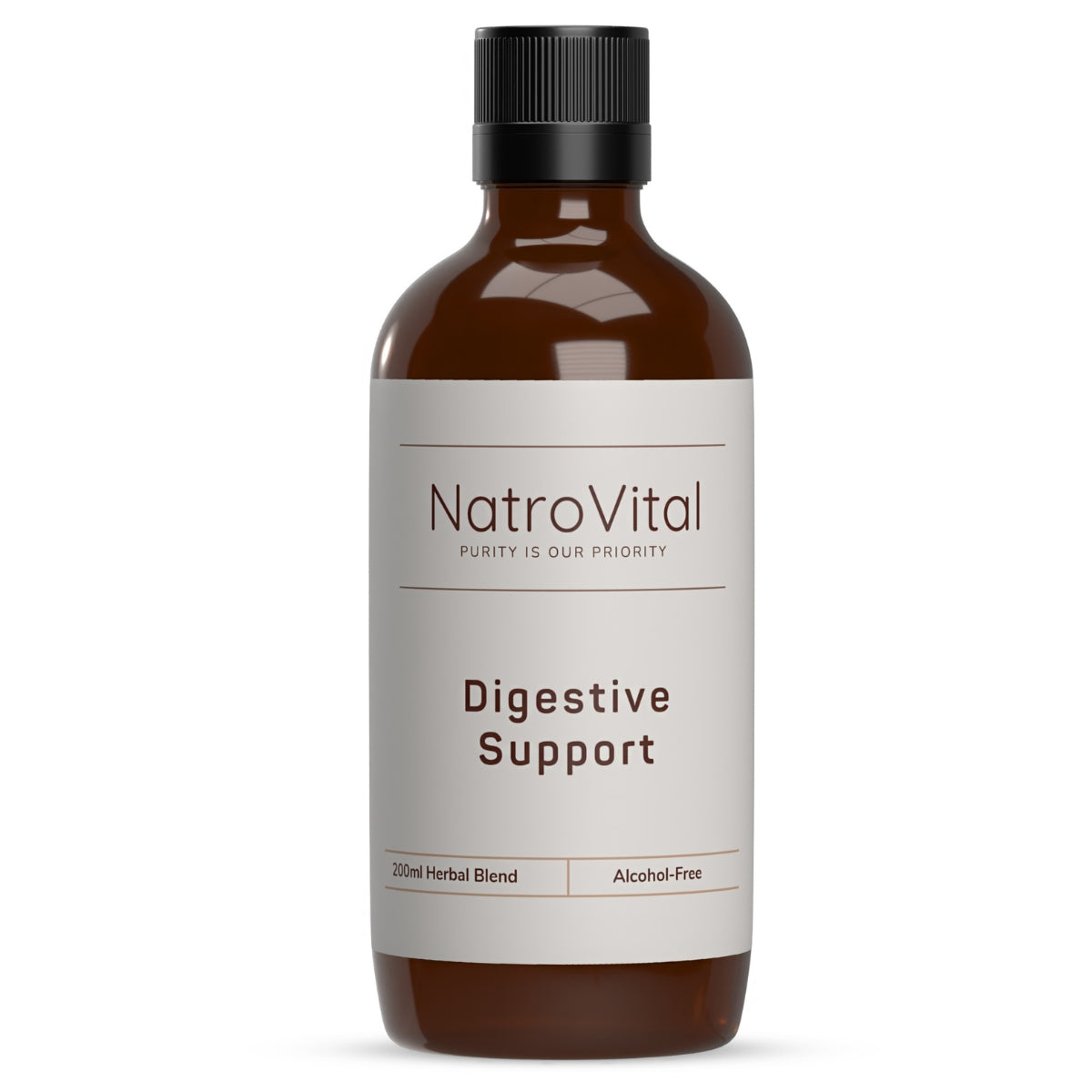








NatroVital Digestive Support
$59.95
NatroVital Digestive Support Herbal Tonic
-
Do You Often Feel Bloated, Heavy or Overly Full After Eating?
You finish a meal and instead of feeling comfortably satisfied, your stomach feels heavy, tight or overly full. You may begin burping, feel pressure building beneath your ribs or notice bloating that becomes worse as the afternoon or evening goes on.
Sometimes the meal was large or rich, but other times it was something you would normally consider healthy. You may have eaten chicken and vegetables, eggs, salad or a simple home-cooked meal and still feel as though it is sitting in your stomach for hours.
You may also notice that certain foods are becoming harder to tolerate. Meat feels too heavy, fatty meals leave you uncomfortable, raw vegetables cause bloating or you begin avoiding foods because you are never quite sure how your stomach will react.
It is easy to assume the food itself must be the problem. Sometimes it is. But digestive discomfort can also occur when the body is not producing or releasing enough of what it needs to properly break that food down.
You can be eating well and still not be digesting well.
What Does Your Body Need to Properly Digest a Meal?
Eating nutritious food is only the first step. Before your body can absorb and use those nutrients, the meal must be pulled apart into much smaller components.
Protein must be broken down into amino acids, fats must be dispersed and broken apart, and carbohydrates must be reduced into simpler sugars. This requires several parts of the digestive system to work together:
- Saliva moistens food and contains amylase, an enzyme that begins breaking down carbohydrates while you chew.
- Stomach acid and gastric enzymes begin breaking down protein and fats, while helping prepare the meal for the next stage of digestion.
- Pancreatic enzymes continue the breakdown of protein, fats and carbohydrates once food enters the small intestine.
- Bile disperses dietary fats into much smaller droplets, allowing digestive enzymes to break them down more effectively so they can be absorbed.
If these digestive secretions are not being released efficiently, food may remain only partially broken down as it moves through the digestive tract.
This can contribute to that familiar feeling that a meal is just sitting there, along with fullness, burping, bloating, excessive wind or discomfort after eating.
Why Low Stomach Acid Can Feel Like Too Much Acid
Many people assume that heartburn or reflux automatically means they have too much stomach acid. In reality, the opposite can sometimes be contributing to the problem.
When there is not enough stomach acid, food may not be broken down as efficiently as it should. Instead of moving through the stomach normally, it can remain there longer and begin to ferment.
As that fermentation occurs, gases are produced. The pressure builds, leaving you feeling bloated, tight or overly full after eating. That pressure has to go somewhere. It may travel upwards as burping or reflux, or continue through the intestines as excessive wind.
This is why some people notice they burp repeatedly after meals, develop unpleasant breath, feel pressure beneath the ribs or experience heartburn despite not necessarily producing excessive amounts of stomach acid.
Sometimes the problem is not too much acid. It is that the meal was never being properly digested in the first place.
What Does Sluggish Digestion Feel Like?
Sluggish digestion does not feel exactly the same for everyone. You may recognise several of these patterns:
- You finish a normal-sized meal but feel as though you have eaten twice as much.
- Food seems to sit heavily for hours, with pressure or fullness beneath the ribs.
- Burping begins soon after eating, while bloating and wind build later in the day.
- Meat, eggs or fatty foods are becoming harder to digest.
- You feel hungry before the meal, but your appetite disappears after only a few mouthfuls.
- A meal leaves you tired, foggy or wanting to lie down instead of feeling comfortably satisfied.
- You blame bread, dairy or certain vegetables, but even meals without them can still leave you bloated or heavy.
- Your digestion is noticeably worse when you eat quickly, eat late or sit down to a meal while still stressed and rushed.
When several of these patterns occur together, the problem may not be one particular food. Your digestive system may not be preparing for the meal or breaking it down as efficiently as it once did.
Are You Supporting Digestion—or Doing Its Job for It?
Digestion begins before food ever reaches your stomach. The moment you taste something bitter, saliva increases and a message is sent through the digestive system: food is coming.
The stomach begins preparing its acid and gastric juices. Those changes help signal the pancreas to have digestive enzymes ready and encourage the gallbladder to release bile produced by the liver.
It is a chain reaction. The mouth alerts the stomach, the stomach alerts the pancreas and the rest of the digestive system prepares to do its part.
This is very different from simply swallowing betaine hydrochloride or digestive enzymes with every meal. These supplements provide acid or enzymes from outside the body. They may make the meal easier to digest while you are taking them, but they are still doing work that your stomach or pancreas would normally be expected to perform.
When that job is continually handed over to a supplement, the digestive system has less reason to respond for itself. In simple terms, it can become lazy. You may feel better while taking the product, but once you stop, you can find yourself back where you started—or increasingly reliant on taking it with every meal.
NatroVital Digestive Support was formulated with a different purpose. Its bitter, warming and aromatic herbs are tasted before the meal, helping awaken the body’s own digestive responses rather than simply replacing them.
The bitterness stimulates saliva and begins signalling the stomach, pancreas and gallbladder to prepare for the food that is coming. The aim is to encourage the digestive system to become more active, so each part begins doing more of the work it was designed to do.
This may take time. Some people may only need Digestive Support for a relatively short period, while others may require several months of consistent use as their digestion gradually becomes stronger and more responsive.
You are not simply borrowing acid or enzymes from a capsule. You are encouraging your own digestive system to wake up, prepare for the meal and start doing its job again.
Please Note: NatroVital Digestive Support has been professionally formulated using traditional herbal knowledge. The information on this page explains the traditional herbal principles behind this formula and is not intended to diagnose, treat, cure or prevent any medical condition. If you would like help deciding whether Digestive Support is the most suitable tonic for you, please contact our clinic before purchasing.
Want to know what’s in this formula?
Continue to the Ingredients or read the Frequently Asked Questions.
-
Why These Herbs Were Chosen
NatroVital Digestive Support combines herbs traditionally used to help the digestive system prepare for food and respond more effectively once a meal arrives.
Some herbs stimulate saliva and digestive secretions before eating. Others help wake up a sluggish stomach, support the release of bile needed to digest fats or settle nausea, cramping and discomfort when a meal is not moving through comfortably.
Each herb was selected for a particular role, but they are designed to work together—from the first bitter taste in the mouth through to the breakdown and movement of the meal.
The herbs below are grouped according to the main role they play within the formula. Some appear in more than one section because a single herb may contribute to several stages of digestion.
Herbs That Help Prepare Digestion Before a Meal
- Organic Angelica Root (Angelica archangelica)
- Organic Barberry (Berberis vulgaris)
- Organic Gentian (Gentiana lutea)
- Organic Globe Artichoke (Cynara scolymus)
These bitter herbs have traditionally been taken before meals when food regularly sits heavily in your stomach, you feel overly full after eating or your appetite is poor. Their bitterness contacts the mouth and tongue first, stimulating saliva and sending an early signal through the digestive system that food is coming. This helps prepare the stomach and encourage the digestive secretions needed to begin breaking the meal down before discomfort develops.
Herbs Traditionally Used to Encourage Stomach Acid and Gastric Juices
- Organic Angelica Root (Angelica archangelica)
- Organic Barberry (Berberis vulgaris)
- Organic Gentian (Gentiana lutea)
- Organic Globe Artichoke (Cynara scolymus)
Stomach acid is needed to begin breaking down protein and to help release nutrients from the meal. When too little is produced, meat and other protein-rich foods may sit in the stomach for hours, followed by repeated burping, fermentation, unpleasant breath, bloating or reflux. The bitter taste of these herbs helps signal the stomach to prepare its own acid and gastric juices before food arrives, rather than simply supplying replacement acid from a betaine hydrochloride capsule.
Herbs Traditionally Used to Encourage Digestive Enzyme Release
- Organic Black Pepper (Piper nigrum)
- Organic Ginger (Zingiber officinale)
- Organic Cinnamon (Cinnamomum verum)
Once food begins leaving the stomach, the pancreas needs to release enzymes that continue breaking down protein, fats and carbohydrates. Black Pepper, Ginger and Cinnamon help stimulate this stage of digestion, encouraging the body to release more of its own digestive enzymes rather than relying entirely on enzymes supplied in a capsule.
Herbs Traditionally Used When Food Sits in the Stomach for Too Long
- Organic Angelica Root (Angelica archangelica)
- Organic Black Pepper (Piper nigrum)
- Organic Cinnamon (Cinnamomum verum)
- Organic Ginger (Zingiber officinale)
These warming and aromatic herbs have traditionally been used when food seems to sit in the stomach for hours, burping begins soon after eating or a substantial meal leaves you overly full and wanting to loosen your clothing or lie down. Their role within the formula is to warm and stimulate digestion, encourage the meal to move through the stomach more comfortably and reduce the stagnant feeling that develops when food is not being processed efficiently.
Herbs Traditionally Used to Support the Digestion of Fats
- Organic Barberry (Berberis vulgaris)
- Organic Gentian (Gentiana lutea)
- Organic Globe Artichoke (Cynara scolymus)
Fatty foods require bile before they can be properly broken down and absorbed. When bile flow is sluggish, fried foods, creamy meals, rich sauces, fatty meats and even healthy fats may leave you feeling overly full, nauseous or as though the meal is simply sitting in your stomach for hours. These herbs have traditionally been used to support healthy bile production and flow, helping prepare the digestive system for meals containing fats so they can be digested more comfortably.
Herbs Traditionally Used for Burning, Nausea and Gastric Irritation
- Organic Cinnamon (Cinnamomum verum)
- Organic Fenugreek (Trigonella foenum-graecum)
- Organic Ginger (Zingiber officinale)
- Organic Meadowsweet (Filipendula ulmaria)
Product Size: 200ml Liquid
Encouraging stronger digestion should not mean leaving an already sensitive stomach feeling more irritated. This part of the formula is traditionally used when poor digestion is accompanied by burning, nausea, cramping or inflammation of the upper digestive tract. Meadowsweet plays an especially important role by helping calm and protect irritated gastric tissues while the bitter and warming herbs continue stimulating the digestive process.
How the Herbs Work Together
Digestive Support was not formulated around one symptom or one digestive secretion. The formula begins with bitter herbs to alert the digestive system that food is coming, warming herbs to encourage a sluggish stomach to respond, bile-supporting herbs to help with fats and soothing herbs to keep the process comfortable.
This means the formula may be useful whether the main problem is poor appetite, food sitting heavily, repeated burping, bloating, excessive wind or difficulty managing protein-rich and fatty meals.
Each herb has its own role, but together they help the mouth, stomach, pancreas, liver and gallbladder prepare for the same meal.
Digestive Support or Stomach Support?
NatroVital Digestive Support is most suitable when reflux or burping appears alongside signs that food is not being broken down properly, such as prolonged fullness, fermentation, bloating, excessive wind or difficulty digesting protein-rich and fatty meals.
If heartburn, burning or regurgitation is frequent and appears to be related to ongoing irritation of the stomach or oesophagus, NatroVital Stomach Support may be the more suitable starting point. Digestive Support may be introduced later as the irritation settles, or the two tonics may be used together when both poor digestion and upper digestive irritation are contributing.
Why We Use Liquid Herbal Extracts
- Only the concentrated herbal compounds are extracted—not the bulk plant fibre found in powders, tablets and capsules
- Rapid absorption through the tissues of the mouth and digestive tract
- Does not rely solely on digestion to begin delivering herbal compounds
- No synthetic fillers or binders
- No bulking agents
- No artificial flavours or sweeteners
- No unnecessary additives
- 100% alcohol-free formula
Unlike powders, capsules and tablets that contain the entire dried herb, our liquid extracts contain only the concentrated plant compounds extracted during our manufacturing process. This allows the herbal constituents to begin interacting with the body from the moment they enter the mouth, without relying entirely on digestion to break down tablets, capsules or plant fibre first.
Our Commitment to Purity
- Vegetable Glycerine: Used as a natural preservative and sweetener without the need for artificial additives.
- Purified Grander Water: Free from chlorine and fluoride, providing a clean base for our herbal extracts.
- 100% Alcohol-Free: Alcohol is removed after extraction using a low-temperature vacuum process before being replaced with vegetable glycerine and purified water.
- Vegan and Free From Common Added Allergens: Free from gluten, dairy, eggs, soy, nuts, corn, yeast, artificial colours, flavours and preservatives.
How NatroVital Digestive Support Is Made
We begin with a pharmaceutical-grade alcohol extraction to draw out the broad spectrum of active plant compounds from the raw herbs. Once extraction is complete, the alcohol is gently removed under vacuum at low temperatures to help preserve the integrity of the herbal constituents.
The concentrated extract is then blended with vegetable glycerine and purified Grander water to create a clean, stable, alcohol-free herbal tonic.
Every bottle is formulated and produced by us in Australia using small-batch manufacturing methods that prioritise purity, quality and attention to detail.
Active Herbal Ingredients Per Serve
Each 1mL of NatroVital Digestive Support is made from the equivalent of 500mg of dried herbal material. Rather than containing ground herbs or bulk plant fibre, the alcohol- and water-soluble compounds have already been extracted from the herbs and concentrated into liquid form. This allows each dose to provide the extracted herbal constituents without relying on digestion to first break down dried root, leaf or powdered plant material.
Want to learn more about the fillers, binders, coatings and additives commonly used in supplements? Read our guide on The Truth About Excipients.
Still have questions?
Read our Frequently Asked Questions for dosage information, common combinations and answers to the questions we're most often asked in clinic.
-
NatroVital Digestive Support Common Questions
- ◄What is the recommended dosage for NatroVital Digestive Support?
- Adults: Take 7.5mL, 2–3 times daily, or as directed by your healthcare practitioner.
- ◄How should I take Digestive Support?
- Measure the recommended dose and mix it with a small amount of water or juice. Drink the full mixture, including any remaining residue in the measuring cup.
- ◄Why do I feel bloated after meals, even when I eat healthy food?
-
If bloating happens after many different meals, including healthy foods such as meat, eggs, nuts, salads or raw vegetables, it may not be one particular food causing the problem. Your digestive system may not be producing or releasing enough stomach acid, digestive enzymes or bile to break the meal down properly.
Partially digested food can remain in the digestive tract for longer and begin to ferment, producing gas and pressure. This can leave you bloated even after meals that do not contain your usual suspected foods.
Digestive Support is traditionally used before meals to help stimulate the body’s own digestive secretions, so the meal can be broken down more efficiently from the beginning.
- ◄Why do I burp so much after eating?
-
Burping is often a sign that pressure is building inside the stomach after a meal. If food is sitting there longer than it should, gas can build above it and escape upwards as repeated burping.
If this regularly happens alongside prolonged fullness, pressure beneath the ribs or bloating later in the day, it may suggest that the meal is not being broken down as efficiently as it should.
Digestive Support is traditionally taken before meals to help prepare the digestive system before food arrives, rather than trying to settle symptoms after they have already developed.
- ◄Can low stomach acid really cause reflux or heartburn?
-
Yes. Reflux is not always caused by too much stomach acid. In some people, low stomach acid can slow the breakdown of food, causing fermentation and a build-up of pressure inside the stomach. This pressure can then push stomach contents upwards into the oesophagus.
Digestive Support may be suitable when reflux occurs alongside prolonged fullness, bloating, burping, excessive wind or difficulty digesting protein-rich and fatty foods. When burning, irritation or regurgitation is more prominent, NatroVital Stomach Support may be the more appropriate starting point.
Digestive Support and Stomach Support can also be used together when poor digestion and irritation are both contributing to symptoms. If the stomach or oesophagus is particularly irritated, Stomach Support may be used first before gradually introducing Digestive Support. The two formulas can be taken approximately 30 minutes apart.
- ◄How long does it usually take to notice a difference?
-
In clinic, many people notice an improvement within the first 24 to 48 hours, particularly when Digestive Support is taken 10 to 15 minutes before each main meal.
The first changes may be less bloating, reduced burping, less pressure after eating or meals no longer sitting in the stomach for as long. This does not necessarily mean digestion has fully recovered, only that the digestive system is beginning to respond more effectively.
If the problem has been present for a long time, Digestive Support may still need to be taken consistently for several weeks or months before gradually reducing the dose.
- ◄Do I have to take Digestive Support forever?
-
Not necessarily. Digestive Support is designed to encourage your own digestive system to prepare for meals, rather than permanently replacing stomach acid or digestive enzymes from an outside source.
Some people only need it for a relatively short period, while others with long-standing digestive sluggishness may continue for several months. As digestion improves, you may find that you can reduce the dose or only use it before larger or heavier meals.
The length of time needed will depend on how long the problem has been present and how consistently the tonic is taken. As digestion improves, many people find they can gradually reduce how often they use it. - ◄Should I take Digestive Support before or after meals?
-
Digestive Support is best taken shortly before eating, ideally around 10 to 15 minutes before the meal.
The bitter taste in the mouth is an important part of how the formula works. It stimulates saliva and begins signalling the stomach and the rest of the digestive system that food is coming. Taking it before the meal gives the body time to begin preparing its digestive secretions.
If you forget, it can still be taken with the meal, but it is generally less useful to wait until you are already bloated, burping or feeling overly full.
- ◄What can help if poor digestion is causing gas, bowel changes or smelly poo?
-
Digestive Support works at the beginning of digestion by helping the stomach, pancreas, liver and gallbladder prepare for the meal. However, when food has been poorly digested for some time, more of it may ferment further along the digestive tract, contributing to excessive wind, bowel changes and stronger-smelling stools and gas.
MultiBac 10 may be useful when the aim is to replenish and support beneficial intestinal bacteria. ReVitalise Prebiotic Powder provides the food these bacteria need to grow and may also be helpful when bowel movements are sluggish or irregular.
When there is persistent bloating, excessive or strong-smelling wind, noticeably strong-smelling stools or ongoing bowel irregularity, Intestinal Cleanse may be the more appropriate addition. The right combination depends on whether the main problem is poor breakdown of the meal, reduced beneficial bacteria or a more established intestinal imbalance.
- ◄What makes herbal tonics different from capsules, tablets, or powders?
- NatroVital Digestive Support is a liquid herbal tonic made without synthetic fillers, binders, bulking agents, preservatives, flavours, or sweeteners—ingredients commonly found in capsules, tablets, and powders. Because it’s alcohol-free and doesn’t require digestion, it delivers fast-absorbing, concentrated herbal extracts in their purest form. You get only what the body needs—nothing unnecessary or artificial.
Want to know more about what’s really in your supplements? Read our blog on excipients here. - ◄Why choose NatroVital over other supplement brands?
-
NatroVital is a proudly Australian-owned and operated business, created by Greg Newson—a qualified naturopath, herbalist, and nutritionist with over 20 years of clinical experience. NatroVital was born out of frustration with the supplement industry. Too many products were loaded with synthetic fillers, binders, sweeteners, and unnecessary additives that offered little benefit—and often stood in the way of genuine healing.
At NatroVital, we believe that what’s left out of a supplement is just as important as what goes in. That’s why every one of our herbal tonics is made using only pure, concentrated herbal extracts—nothing more. All of our products, including Digestive Support, are formulated and produced at our own facility here in Australia. We're a small, family-run business committed to clean, honest, and effective natural health solutions you can trust.
- ◄Is Digestive Support suitable for vegans and vegetarians?
- Yes. The formula is 100% plant-based and contains no animal-derived ingredients.
- ◄Are there any precautions or interactions to be aware of?
- While the herbs in this tonic have a long history of traditional use, please exercise caution in the following situations:
Pregnancy and BreastFeeding: Not recommended during pregnancy or Beastfeeding unless under professional guidance.
Salicylate sensitivity: Meadowsweet contains natural salicylates and should be avoided by those sensitive to them.
Active gastric irritation: Use caution if you have active gastric or duodenal ulcers, or severe reflux symptoms that worsen with bitter or spicy herbs.
Gallstones: Bile-stimulating herbs may not be suitable where gallstones are present unless professionally guided.
Anti-diabetic medications: Fenugreek, Turmeric and Cinnamon may influence blood sugar regulation. Monitoring is advised if taking glucose-lowering medication.
Anticoagulants or antiplatelet medications: Ginger and Turmeric may support circulation. Use caution and seek professional advice if taking blood-thinning medication.
Allergies: Avoid use if you are allergic or sensitive to any of the listed ingredients.
Always consult your practitioner if you are taking medication, have a medical condition, or are unsure if this tonic is suitable for you.