








NatroVital Cholesterol Support
$59.95
-
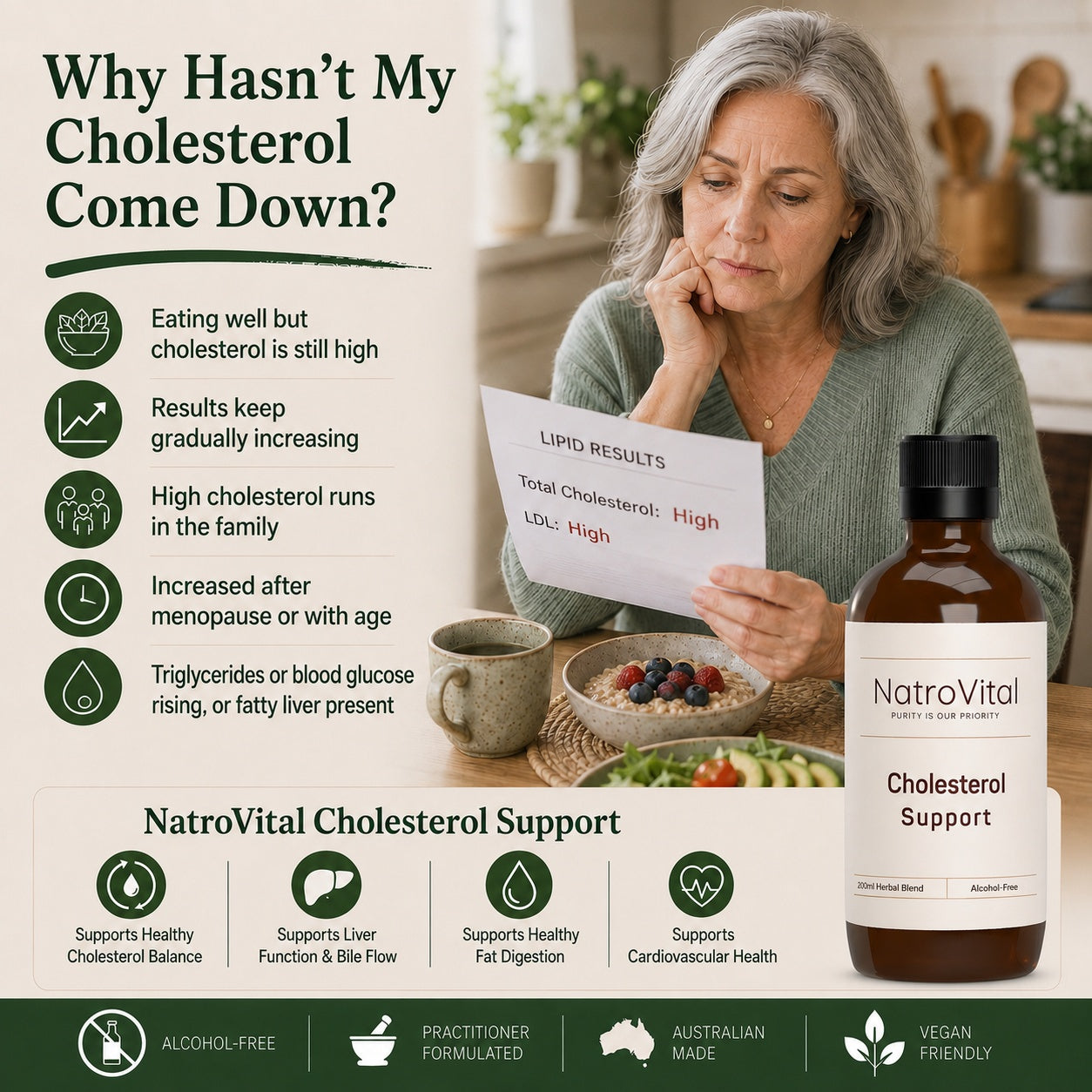
Why Hasn’t My Cholesterol Come Down?
You’ve cut back on butter, cheese and fried foods. You may have switched to low-fat products, started exercising more or tried to lose weight because you were told these changes would help lower your cholesterol.
Then your next blood test comes back and your cholesterol is still high, or has barely changed.
This is where many people become frustrated. They have made a genuine effort with their diet and lifestyle, but the result does not seem to reflect the changes they have made.
The reason is that cholesterol levels are not determined by diet alone. Most of the cholesterol your body uses is made inside the body, primarily by the liver, which means changing what you eat may only address one part of the problem.
Most of Your Cholesterol Is Made Inside Your Body
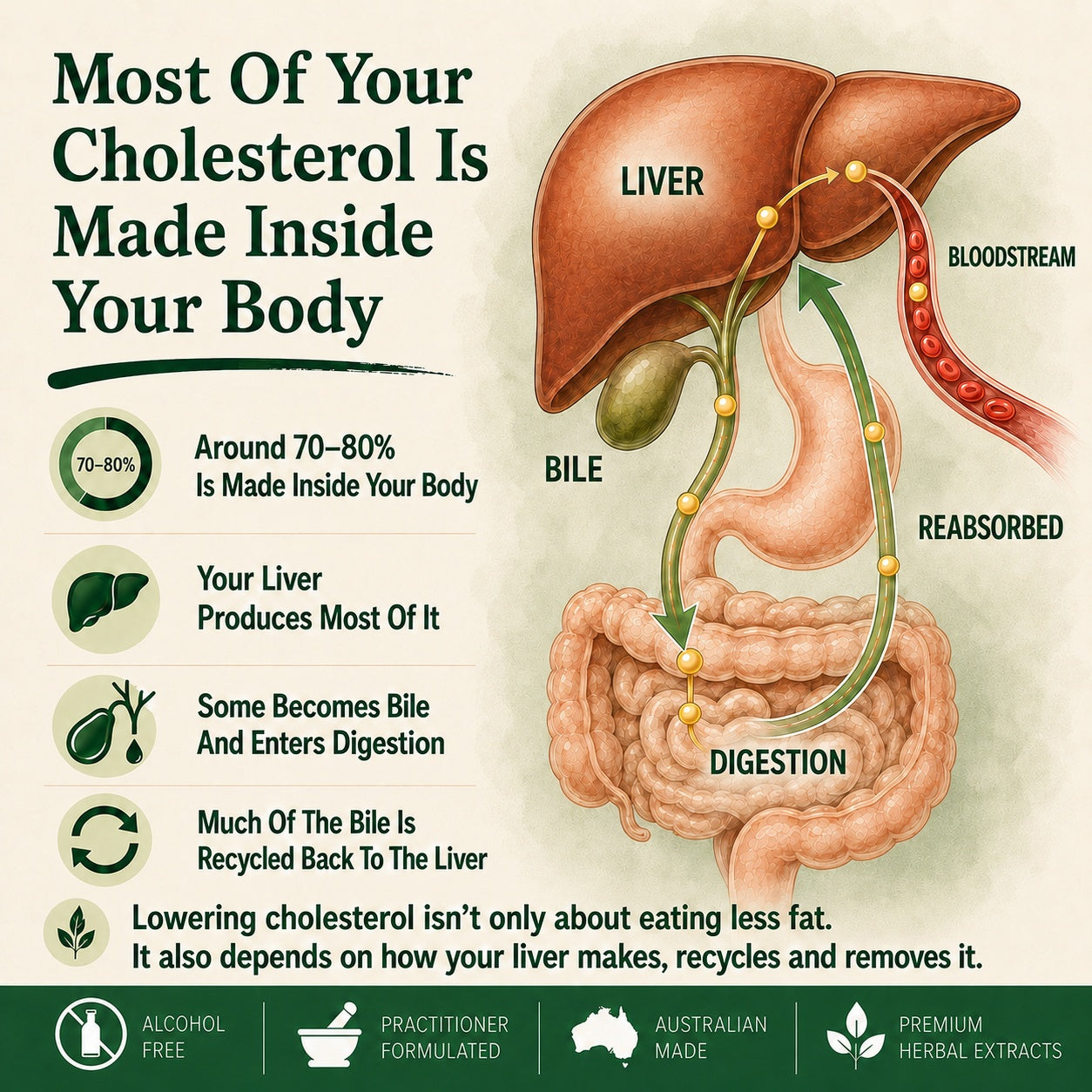
This is the part many people are never told. The cholesterol in your blood does not simply come from butter, cheese, eggs or other fatty foods. Around 70–80% is made inside your own body, primarily by the liver.
Your body makes cholesterol because it needs it. Cholesterol forms part of every cell membrane and is used to produce hormones, vitamin D and bile acids. Even though the brain accounts for only around 2% of your body weight, it contains approximately 20–25% of all the cholesterol in your body.
Cholesterol itself is not the enemy. The concern arises when more cholesterol is circulating than the body needs, or when it is not being processed and removed as efficiently as it should be.
This helps explain why two people can eat similar diets and have completely different cholesterol results. It also explains why someone can make significant dietary changes and see only a small improvement. What you eat still matters, but what your body is doing with cholesterol matters just as much.
Your Body Recycles Cholesterol
The liver does not only make cholesterol. It also converts some of it into bile acids, which are released into the digestive system to help break down fats and carry cholesterol into the bowel.
Most of that bile does not leave the body. It is absorbed again and returned to the liver, where it can be used again.
Put simply, cholesterol can keep travelling in a loop between the liver, bile and digestive system. Healthy cholesterol balance therefore depends not only on how much cholesterol is being made, but also on how efficiently it is being used, recycled and removed.
Does This Sound Familiar?
For many people, the concern is not one isolated blood test. It is that their cholesterol stays high or continues to rise even after they have tried to do something about it.
- My cholesterol is still high even though I have improved my diet.
- It has gradually increased over several blood tests.
- High cholesterol runs in my family.
- My cholesterol increased after menopause or as I became older.
- My triglycerides, blood glucose or weight are also beginning to rise.
- I have been told I have fatty liver or elevated liver enzymes.
- I want to do more than simply wait for my next blood test.
When this is the pattern, cutting out another food may not provide the complete answer. It makes sense to also support the liver, bile flow, fat digestion and circulation—the areas involved in how cholesterol and fats are handled by the body.
An elevated cholesterol result should also be considered alongside triglycerides, blood glucose, blood pressure, inflammation, smoking, family history and other cardiovascular risk factors. The cholesterol number matters, but it is only one part of the picture.
Why NatroVital Cholesterol Support Was Formulated
Traditional herbal practitioners did not measure cholesterol or understand it in the way we do today. What they did recognise were problems such as poor fat digestion, sluggish bile flow, liver congestion and reduced circulation, and they used herbs to support these areas of the body.
Today we understand that the liver, bile, digestive system and circulation all influence how cholesterol and fats are produced, processed and removed.
That is why NatroVital Cholesterol Support was formulated with six organic herbs rather than relying on a single ingredient for a single cholesterol number. Some of the herbs have traditionally been used to support liver function and healthy bile flow, while others were selected for fat digestion, circulation and cardiovascular health.
This formula may be suitable for adults whose cholesterol remains elevated despite making changes to their diet and lifestyle, or for those wanting additional traditional herbal support before their next cholesterol test.
The purpose is not to remove cholesterol completely or treat it as though it has no useful role in the body. It is to support the liver, bile, digestion and circulation involved in keeping cholesterol production, recycling and removal in better balance.
Please Note: NatroVital Cholesterol Support is formulated using traditional herbal knowledge and we refer to the historical use of herbs when describing this product. It is not intended to replace prescribed cholesterol medication. If you are taking medication or are unsure whether this formula is suitable for your needs, please contact our clinic before purchasing.
Want to know what’s in this formula?
Continue to the Ingredients or read the Frequently Asked Questions.
-
Why These Herbs Were Chosen
A cholesterol formula does not need six herbs that all perform the same role. Each herb in NatroVital Cholesterol Support was selected for a different reason.
Some were chosen because modern research has investigated their effects on healthy cholesterol and triglyceride levels. Others have a long history of traditional use for liver function, bile flow, fat digestion, circulation and cardiovascular health.
This distinction is important. Traditional herbal practitioners did not measure cholesterol or treat a cholesterol result. They did, however, understand the liver, bile, digestion and circulation, and used herbs to support these areas when they were not functioning as well as they should.
Herbs Selected for Healthy Cholesterol and Triglyceride Support
- Organic Fenugreek (Trigonella foenum-graecum)
- Organic Garlic (Allium sativum)
- Organic Globe Artichoke (Cynara scolymus)
- Organic Turmeric (Curcuma longa)
These herbs were selected because modern research has investigated their effects on healthy cholesterol and triglyceride levels. This reflects what is now understood about these herbs rather than suggesting that traditional practitioners were measuring cholesterol centuries ago.
Herbs Traditionally Used to Support Liver Function and Bile Flow
- Organic Globe Artichoke (Cynara scolymus)
- Organic Turmeric (Curcuma longa)
- Organic Rosemary (Rosmarinus officinalis)
- Organic Ginger (Zingiber officinale)
The liver plays a central role in cholesterol balance by producing cholesterol and converting some of it into bile acids. These herbs have traditionally been used to support liver function, bile production and bile flow, which are all involved in the digestion and handling of fats.
Herbs Traditionally Used to Support Fat Digestion
- Organic Globe Artichoke (Cynara scolymus)
- Organic Ginger (Zingiber officinale)
- Organic Rosemary (Rosmarinus officinalis)
- Organic Turmeric (Curcuma longa)
These herbs have traditionally been used to support the digestion of fats by promoting healthy bile flow and digestive function, particularly when rich or fatty foods are difficult to digest.
Herbs Traditionally Used to Support Circulation and Cardiovascular Health
- Organic Garlic (Allium sativum)
- Organic Ginger (Zingiber officinale)
- Organic Rosemary (Rosmarinus officinalis)
- Organic Turmeric (Curcuma longa)
Because cholesterol is transported through the bloodstream, circulation and cardiovascular health are also important parts of the picture. These herbs have traditionally been used to support healthy circulation and cardiovascular function.
Why We Use Liquid Herbal Extracts
- Only the concentrated herbal compounds are extracted—not the bulk plant fibre found in powders, tablets and capsules
- Rapid absorption through the tissues of the mouth and digestive tract
- Does not rely solely on digestion to begin delivering herbal compounds
- No synthetic fillers or binders
- No bulking agents
- No artificial flavours or sweeteners
- No unnecessary additives
- 100% alcohol-free formula
Unlike powders, capsules and tablets that contain the entire dried herb, our liquid extracts contain only the concentrated plant compounds extracted during our manufacturing process. This allows the herbal constituents to begin interacting with the body from the moment they enter the mouth, without relying entirely on digestion to break down tablets, capsules or plant fibre first.
Our Commitment to Purity
- Vegetable Glycerine: Used as a natural preservative and sweetener without the need for artificial additives.
- Purified Grander Water: Free from chlorine and fluoride, providing a clean base for our herbal extracts.
- 100% Alcohol-Free: Alcohol is removed after extraction using a low-temperature vacuum process before being replaced with vegetable glycerine and purified water.
- Vegan & Allergen-Free: Free from gluten, dairy, eggs, soy, nuts, corn, yeast, artificial colours, flavours and preservatives.
How NatroVital Cholesterol Support Is Made
We begin with a pharmaceutical-grade alcohol extraction to draw out the broad spectrum of active plant compounds from the raw herbs. Once extraction is complete, the alcohol is gently removed under vacuum at low temperatures to help preserve the integrity of the herbal constituents.
The concentrated extract is then blended with vegetable glycerine and purified Grander water to create a clean, stable, alcohol-free herbal tonic.
Every bottle is formulated and produced by us in Australia using small-batch manufacturing methods that prioritise purity, quality and attention to detail.
Active Herbal Ingredients Per Serve
Each 1mL of NatroVital Cholesterol Support is made from the equivalent of 500mg of dried herbal material. Rather than containing ground herbs or bulk plant fibre, the alcohol- and water-soluble compounds have already been extracted from the herbs and concentrated into liquid form. This allows each dose to provide the extracted herbal constituents without relying on digestion to first break down dried root, leaf or powdered plant material.
Want to learn more about the fillers, binders, coatings and additives commonly used in supplements? Read our guide on The Truth About Excipients.
Still have questions?
Read our Frequently Asked Questions for dosage information, common combinations and answers to the questions we're most often asked in clinic.
-
NatroVital Cholesterol Support Common Questions
- ◄What is the recommended dosage for NatroVital Cholesterol Support?
- For adults, the typical dosage is 7.5ml twice daily, or as directed by your healthcare practitioner.
- ◄How should I take Cholesterol Support?
- Measure the recommended dosage and mix with a small amount of water or juice. Drink the entire mixture, including any residue, to ensure full herbal benefit.
- ◄Who is Cholesterol Support most suitable for?
-
NatroVital Cholesterol Support may be suitable for adults whose cholesterol remains elevated despite improving their diet and lifestyle, or whose cholesterol has gradually increased with age, menopause, fatty liver, changes in blood glucose regulation or a strong family history.
The formula was designed to provide broader herbal support for the liver, bile flow, fat digestion, circulation and cardiovascular health rather than focusing on the cholesterol number alone.
- ◄Why is my cholesterol still high when I eat quite well?
-
Diet influences cholesterol, but it is not the only factor. Most of the cholesterol in your blood is made inside your body, primarily by the liver, rather than coming directly from the food you eat.
Genetics, menopause, thyroid function, insulin resistance, fatty liver, age and the way the liver produces and clears cholesterol can all affect your result. Improving your diet may remove one contributor without necessarily addressing everything else influencing your cholesterol.
- ◄Can I have high cholesterol even if I am slim and active?
-
Yes. Being slim and physically active can reduce cardiovascular risk, but neither guarantees a normal cholesterol result.
A person can exercise regularly, maintain a healthy weight and still have high cholesterol because genetics, menopause, an underactive thyroid, insulin resistance or fatty liver can affect how the liver produces and clears cholesterol. Looking slim and active does not tell you what is happening in the bloodstream.
- ◄Why did my cholesterol increase after menopause?
-
Many women see their cholesterol rise during perimenopause or after menopause even though their diet has not changed.
Before menopause, oestrogen helps the liver remove LDL particles from the bloodstream. As oestrogen levels decline, the liver may not clear LDL as efficiently, allowing it to remain in the blood for longer and causing the LDL cholesterol result to rise.
Menopause can also change where the body stores fat, with more tending to accumulate around the abdomen. This can reduce insulin sensitivity and encourage the liver to produce more triglyceride-rich particles. This is why LDL cholesterol, triglycerides, blood glucose and waist circumference can all begin increasing around the same time.
The rise is therefore not necessarily a sign that a woman has suddenly started eating badly. Hormonal changes can alter how the liver processes and clears cholesterol and fats, even when her diet and lifestyle have remained much the same.
- ◄Can high cholesterol run in families?
-
Yes. You do not inherit cholesterol itself, but you can inherit genes that affect how much cholesterol the liver produces and how efficiently LDL particles are removed from the bloodstream.
If several close relatives have very high cholesterol or developed heart disease at a young age, it is worth asking whether familial hypercholesterolaemia or elevated lipoprotein(a) may be involved. These inherited risks will not necessarily respond to dietary changes alone.
- ◄What is the difference between LDL, HDL and triglycerides?
-
LDL and HDL are often called “bad” and “good” cholesterol, but they are actually transport particles that carry cholesterol through the bloodstream.
LDL carries cholesterol away from the liver to the cells that need it. The problem arises when there are too many LDL particles circulating, because some of that cholesterol can become trapped in the walls of the arteries.
HDL helps collect excess cholesterol from the bloodstream and carries some of it back to the liver, where it can be reused or removed from the body. This is why higher HDL levels are generally considered more protective.
Triglycerides are different. They are a form of fat the body uses to store excess energy. They often rise when the liver is converting excess sugar, refined carbohydrates or alcohol into fat, or when insulin resistance and fatty liver are developing.
- ◄Why are my triglycerides high when I do not eat much fat?
-
High triglycerides do not always come from eating fatty foods. When the body receives more energy than it can use—particularly from sugar, refined carbohydrates or alcohol—the liver can convert some of that excess energy into triglycerides.
This is why someone can follow a relatively low-fat diet and still have elevated triglycerides. The result may be pointing more towards excess carbohydrate intake, alcohol, fatty liver or poor blood glucose and insulin regulation than dietary fat alone.
- ◄Can insulin resistance affect cholesterol and triglycerides?
-
Yes. Insulin does more than control blood glucose. It also tells the liver how to produce, store and release fats.
When the body becomes resistant to insulin, the liver often starts releasing more triglycerides into the bloodstream. HDL cholesterol may fall, while LDL can change into a larger number of smaller, denser particles.
This matters because smaller LDL particles can enter the artery wall more easily. A standard blood test may show that LDL cholesterol is only mildly elevated, without revealing that there are now more potentially harmful particles carrying it.
This is why rising blood glucose, triglycerides and waist circumference often appear together. They may all be signs that insulin resistance is changing how the liver handles sugar, cholesterol and fats.
- ◄Can fatty liver affect my cholesterol results?
-
Fatty liver and abnormal cholesterol or triglyceride results often appear together because the liver is central to both blood fat regulation and cholesterol production.
When excess fat is building up in the liver, the liver may also be releasing more triglyceride-rich particles into the bloodstream. Fatty liver can therefore be an important clue that the cholesterol result is part of a broader problem involving how the body is processing excess energy, glucose and fats.
- ◄Does a standard cholesterol test tell me everything about my cardiovascular risk?
-
A standard cholesterol test is a useful starting point, but it does not provide the complete picture. Total cholesterol, LDL, HDL and triglycerides tell you how much cholesterol and fat is being carried in the blood, but they do not tell you how many cholesterol-carrying particles are circulating or what type of LDL particles make up the result.
LDL contains different subfractions. Some particles are larger and more buoyant, while others are smaller and denser. The smaller, denser LDL particles are considered more damaging because they can enter the artery wall more easily and contribute to plaque formation.
A standard LDL result combines all of these particles into one number. This means two people can have the same LDL cholesterol result, but one may have a larger number of small, dense LDL particles and therefore a very different cardiovascular risk.
Cardiovascular risk also needs to be considered alongside blood pressure, blood glucose and insulin regulation, inflammation, smoking, waist circumference, age and family history. This is why one cholesterol number should never be used to judge the entire picture.
- ◄What additional blood tests can provide more information about cardiovascular risk?
-
ApoB estimates the total number of potentially harmful cholesterol-carrying particles in the blood. This can be particularly helpful when triglycerides are elevated, insulin resistance or diabetes is present, or the standard LDL result does not appear to match the person’s other risk factors.
ApoA1 is the main protein associated with HDL particles. The ApoB:ApoA1 ratio compares the number of potentially harmful particles with the HDL-related transport system, although ApoB alone is generally the more useful measure of the number of particles that can enter the artery wall.
Lipoprotein(a), or Lp(a), can reveal an inherited cardiovascular risk that is not visible on a routine cholesterol test. It is particularly worth considering when there is a strong family history of heart attack, stroke or cardiovascular disease at a younger age.
hs-CRP measures low-grade inflammation that may be placing additional pressure on the artery walls. It does not tell you where the inflammation is coming from, but it can add important information to the cholesterol results.
Fibrinogen is involved in blood clotting and can rise with inflammation. Although elevated levels are associated with cardiovascular risk, it is not usually considered as useful for routine screening as hs-CRP.
Homocysteine may be elevated with folate or vitamin B12 deficiency, reduced kidney function and several other health problems. High levels have been associated with cardiovascular risk, but homocysteine is not routinely used to assess cardiovascular risk in everyone.
These tests are not necessarily required for every person with elevated cholesterol. However, if you are concerned about cardiovascular disease, have a strong family history, or feel that your standard cholesterol results do not explain the full picture, these additional tests may provide a clearer understanding of your cardiovascular risk. Their value depends on your lipid results, metabolic health, family history and other risk factors.
- ◄Are eggs responsible for high cholesterol?
-
Eggs contain cholesterol, but eating cholesterol does not mean it simply passes into your bloodstream and becomes high cholesterol. Your body decides how much cholesterol to make, use and clear, which is why eggs can affect people differently.
For most people, eating eggs does not simply translate into higher blood cholesterol. The body can respond to an increase in dietary cholesterol by reducing the amount of cholesterol it makes itself.
Research using up to three eggs per day has found that eggs can raise HDL cholesterol, support the way HDL carries cholesterol back towards the liver and maintain the balance between LDL and HDL. Some studies have also found that LDL remained unchanged or was lower than baseline despite the higher intake of dietary cholesterol.
The effect of eggs on cholesterol cannot be judged by looking at the eggs alone. The person’s overall diet, genetics, liver function, insulin sensitivity and hormonal health have a much greater influence on how their cholesterol responds.
Eggs eaten as part of a diet built around meat, fish, vegetables, legumes, fruit and other minimally processed foods are very different from a diet dominated by refined carbohydrates, processed foods, excess alcohol and inadequate fibre.
Eggs are therefore unlikely to be the main reason someone’s cholesterol is elevated. Looking at the whole person and the overall pattern of eating provides far more useful information than simply counting how many eggs they eat.
- ◄How does soluble fibre help lower cholesterol?
-
The liver converts some cholesterol into bile acids, which are released into the digestive system. Much of that bile would normally be absorbed again and returned to the liver to be reused.
Soluble fibre binds to some of the bile in the intestines and carries it out through the bowel. The liver must then use more cholesterol to replace the bile acids that have been lost. Oats, barley, legumes, psyllium, apples, pears and many vegetables are useful dietary sources of soluble fibre.
- ◄Will I feel different if my cholesterol improves?
-
Probably not. High cholesterol usually does not produce symptoms, and most people cannot feel whether their cholesterol has increased or decreased.
This means feeling better is not a reliable way to judge whether your cholesterol is changing. A repeat blood test is the only practical way to see whether the numbers are moving in the right direction.
- ◄How long should I use Cholesterol Support before repeating my blood test?
-
Cholesterol changes are normally assessed over weeks rather than days. A repeat lipid test after approximately 10 to 12 weeks gives enough time to see whether consistent changes to diet, exercise and herbal support are producing a meaningful trend.
The most useful comparison is with a previous test performed under similar conditions. Your doctor or practitioner may recommend testing sooner or later depending on how high the original result was, your medications and your overall cardiovascular risk.
- ◄Which NatroVital products can be used alongside Cholesterol Support?
-
Cholesterol Support can be combined with other NatroVital products, but the most suitable combination depends on what else is showing in your blood tests and overall health. You do not need to take every product listed below.
NatroVital Omega Care+ is the most useful general companion when oily fish intake is low or additional cardiovascular support is wanted. Each capsule provides 500mg of EPA and 260mg of DHA—omega-3 fatty acids that form part of healthy cell membranes and support normal cardiovascular function.
NatroVital BSL Balance may be more relevant when elevated cholesterol occurs alongside raised triglycerides, increasing blood glucose, sugar cravings, increased appetite, abdominal weight gain or fatty liver. These signs can indicate that insulin resistance is changing how the liver handles glucose and fats.
NatroVital Liver Detox may be considered when fatty liver, elevated liver enzymes, poor fat digestion or a greater load from alcohol, medications or processed foods is also present. Cholesterol Support already contains herbs selected for liver function and bile flow, so Liver Detox is not automatically needed. It provides additional support when the liver requires more attention.
The best combination depends on whether the main concern is cholesterol alone or whether blood glucose regulation, triglycerides, fatty liver or other cardiovascular risk factors are also involved.
- ◄What makes herbal tonics different from capsules, tablets, or powders?
- NatroVital Cholesterol Support is a liquid herbal tonic made without synthetic fillers, binders, bulking agents, preservatives, flavours, or sweeteners—ingredients commonly found in capsules, tablets, and powders. Because it’s alcohol-free and doesn’t require digestion, it delivers fast-absorbing, concentrated herbal extracts in their purest form. You get only what the body needs—nothing unnecessary or artificial.
Want to know more about what’s really in your supplements? Read our blog on excipients here.
- ◄Why choose NatroVital over other supplement brands?
-
NatroVital is a proudly Australian-owned and operated business, created by Greg Newson—a qualified naturopath, herbalist, and nutritionist with over 20 years of clinical experience. NatroVital was born out of frustration with the supplement industry. Too many products were loaded with synthetic fillers, binders, sweeteners, and unnecessary additives that offered little benefit—and often stood in the way of genuine healing.
At NatroVital, we believe that what’s left out of a supplement is just as important as what goes in. That’s why every one of our herbal tonics is made using only pure, concentrated herbal extracts—nothing more. All of our products, including Cholesterol Support, are formulated and produced at our own facility here in Australia. We're a small, family-run business committed to clean, honest, and effective natural health solutions you can trust.
- ◄Is Cholesterol Support suitable for vegetarians and vegans?
- Absolutely. NatroVital Cholesterol Support is 100% plant-based and free from animal-derived ingredients, making it suitable for both vegetarians and vegans.
- ◄Are there any precautions or interactions to be aware of?
- While the herbs in Cholesterol Support are traditionally well-tolerated, please be aware of the following considerations:
Blood-thinning medications: Garlic, ginger and turmeric may help thin the blood and support circulation. When combined with anticoagulant or antiplatelet medication, they may increase the risk of bleeding.
Diabetes medication: Fenugreek may help support healthier blood sugar levels. Monitor closely if taking glucose-lowering medication, as blood sugar levels may drop further in some individuals.
Gallbladder conditions: Globe Artichoke and turmeric may stimulate bile flow. Use caution if you have gallstones, bile duct obstruction or gallbladder pain.
Reflux or sensitive digestion: Garlic, ginger and turmeric may aggravate reflux or digestive irritation in sensitive individuals.
Allergies: Avoid if you are allergic or sensitive to any of the listed ingredients.
Always consult your practitioner if you’re on medication, have a health condition, or are unsure if this tonic is suitable for you.